
Devnagari: सुश्रुत
Pronunciation: Soo-Sroo-t
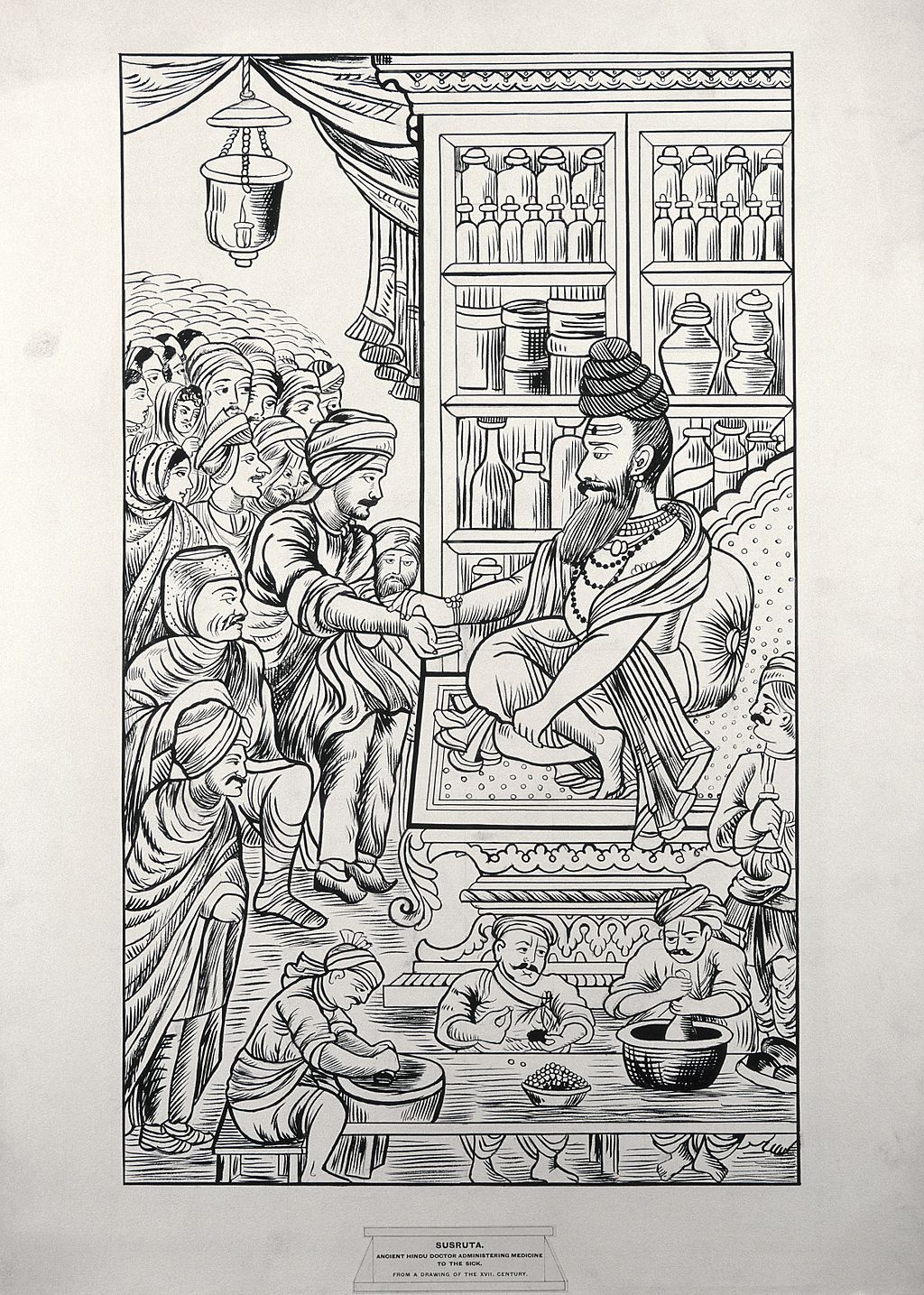
Sushruta: The Father of Surgery
Early Life and Background
Sushruta, known as Suśruta in Sanskrit (meaning “well heard”), is regarded as one of the most significant figures in ancient Indian medicine. He is primarily recognized as the author of the Sushruta Samhita, a foundational text of Ayurveda that covers a wide range of medical knowledge, particularly in the field of surgery. The Sushruta Samhita is considered one of the most important surviving ancient treatises on medicine and surgery.
While the exact dates of Sushruta’s life are debated, it is believed that he lived around the 6th century BCE to the 4th century CE. Scholars suggest that there may have been several ancient authors collectively known as “Sushruta” who contributed to the text.
Authorship and Historical Context
The Sushruta Samhita was likely composed in Varanasi, India. Some scholars, like Rao, propose that the original work may have been attributed to an “elder Sushruta,” later redacted and expanded by subsequent authors, including Nagarjuna. The text itself consists of multiple layers, with its present form completed in later centuries.
Contributions to Medicine
Sushruta’s contributions to medicine are vast, but he is particularly celebrated for his advancements in surgical practices. The Sushruta Samhita includes detailed descriptions of various surgical procedures, including:
- Rhinoplasty: Techniques for reconstructing the nose, often performed on individuals who had suffered injuries or punishments resulting in disfigurement.
- Surgical Instruments: Descriptions of various surgical tools and their uses, showcasing a sophisticated understanding of surgical techniques.
- Anatomy and Physiology: Comprehensive insights into the human body, including the classification of organs and the functions of different bodily systems.
Sushruta’s work laid the groundwork for the practice of surgery in ancient India and set standards that would influence medical practices for centuries.
Training of Disciples
Sushruta established a rigorous training regimen for his disciples, known as Saushrutas. They were required to study for six years, taking an oath similar to the Hippocratic Oath, emphasizing the importance of compassion and ethical practice in medicine. His teaching methods included hands-on training, where students practiced surgical techniques on vegetables and animal corpses before working on actual patients.
Philosophy of Medicine
Sushruta’s philosophy emphasized a holistic approach to healing. He believed that disease resulted from an imbalance in the body, and it was the physician’s duty to restore this balance. He articulated a vision of the ideal medical practitioner as someone who is calm, attentive, and dedicated to the well-being of their patients.
Legacy and Influence
Sushruta’s legacy endures through his innovative contributions to surgery and holistic medicine. His writings on surgical techniques, particularly rhinoplasty, have earned him the title of “the father of plastic surgery.” His practices and teachings continued to be influential in India and beyond, with references to his work appearing in medical literature for centuries.
Sushruta is also credited with early observations linking diseases to environmental factors, such as attributing malaria to mosquitoes and recognizing the role of rats in the spread of plague. His keen observations of diabetes, diagnosed by the sweet taste of urine, further exemplify his contributions to early medical science.
Conclusion
Sushruta remains a pivotal figure in the history of medicine, particularly in the fields of surgery and Ayurveda. His pioneering work in surgical techniques, holistic healing, and medical ethics has left an indelible mark on the practice of medicine, ensuring that his teachings continue to resonate in contemporary medical practices. The Sushruta Samhita remains a vital reference for practitioners and scholars of Ayurveda today.
ROOM DETAILS
Thank You for looking over Room 005 Süshrüt. Have a wonderful time at Jungle Mahal!
Treatme