
Jungle Mahal offers half day city tour across old heritage sites. Kathmandu city tour route follows one of the oldest walking paths in the valley — the ancient trade route that once carried salt, wool, and pilgrims between Tibet and India. In half a day on foot you will pass a UNESCO World Heritage Site, the home of a living goddess, a 1,300-year-old market, and a tree that cures toothaches. Below is a stop-by-stop guide put together by our reception team to help you get the most out of your walk.
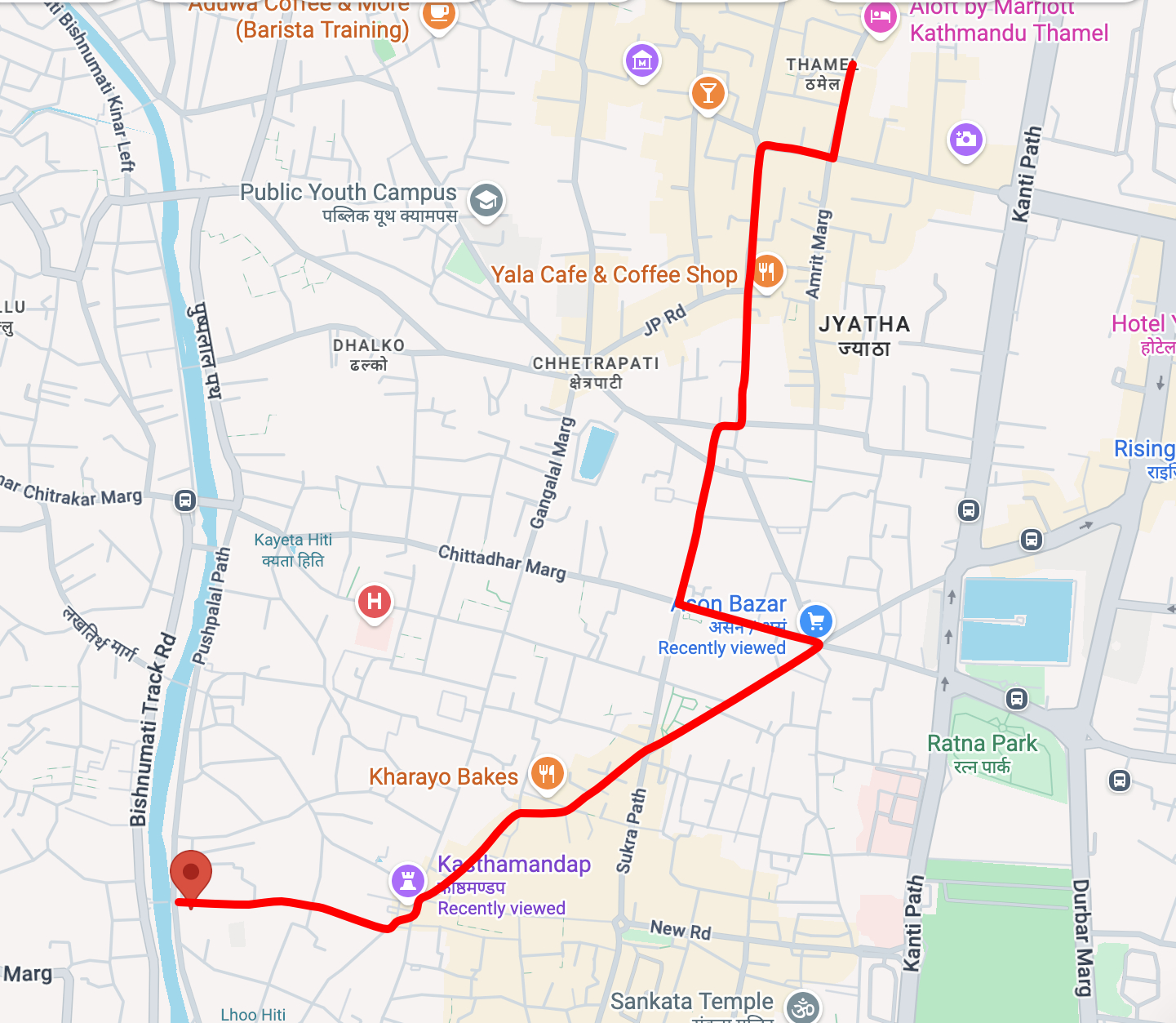
Ramghat (Bishnumati) → Kasthamandap → Kathmandu Durbar Square → Indrachowk → Ason → Bangemudha →Thamel
The Route at a Glance
Start at Ramghat on the Bishnumati River and walk east into the old city: Kasthamandap → Kumari Ghar →Kathmandu Durbar Square & the Nine Storey Palace → Mahankal Mandir → Taleju Bhawani → Indrachowk & Potey Bazar → Janabahal (Seto Machindranath/Machindranath Temple) → Ason Bazar & the spice/herb (jadibuti) shops → left turn to Bangemudha → Shree Gaha Bihar → arriving in Thamel.
Stop by Stop
Stop 1 — Ramghat, Bishnumati River (starting point)
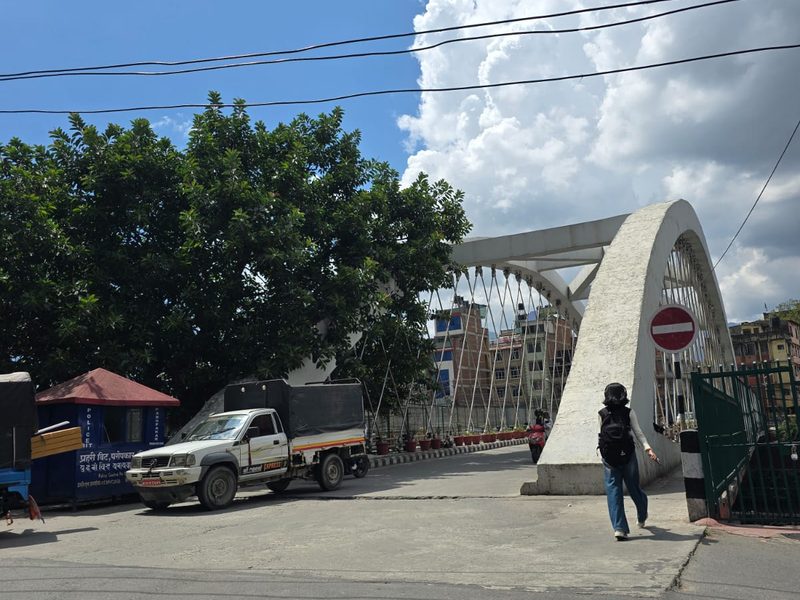
The walk begins on the banks of the Bishnumati, one of the valley’s two sacred rivers (alongside the Bagmati), which rises near Shivapuri mountain to the north and flows down through the western edge of old Kathmandu. Its name means ‘the river beloved of Lord Vishnu,’ and it has long been used for bathing, cremation, and daily rituals by both Hindu and Buddhist communities.
Ramghat and the ghats nearby are still used for these purposes today, so guests are welcome to observe respectfully from a distance.
Stop 2 — Kasthamandap (the temple that gave Kathmandu its name)
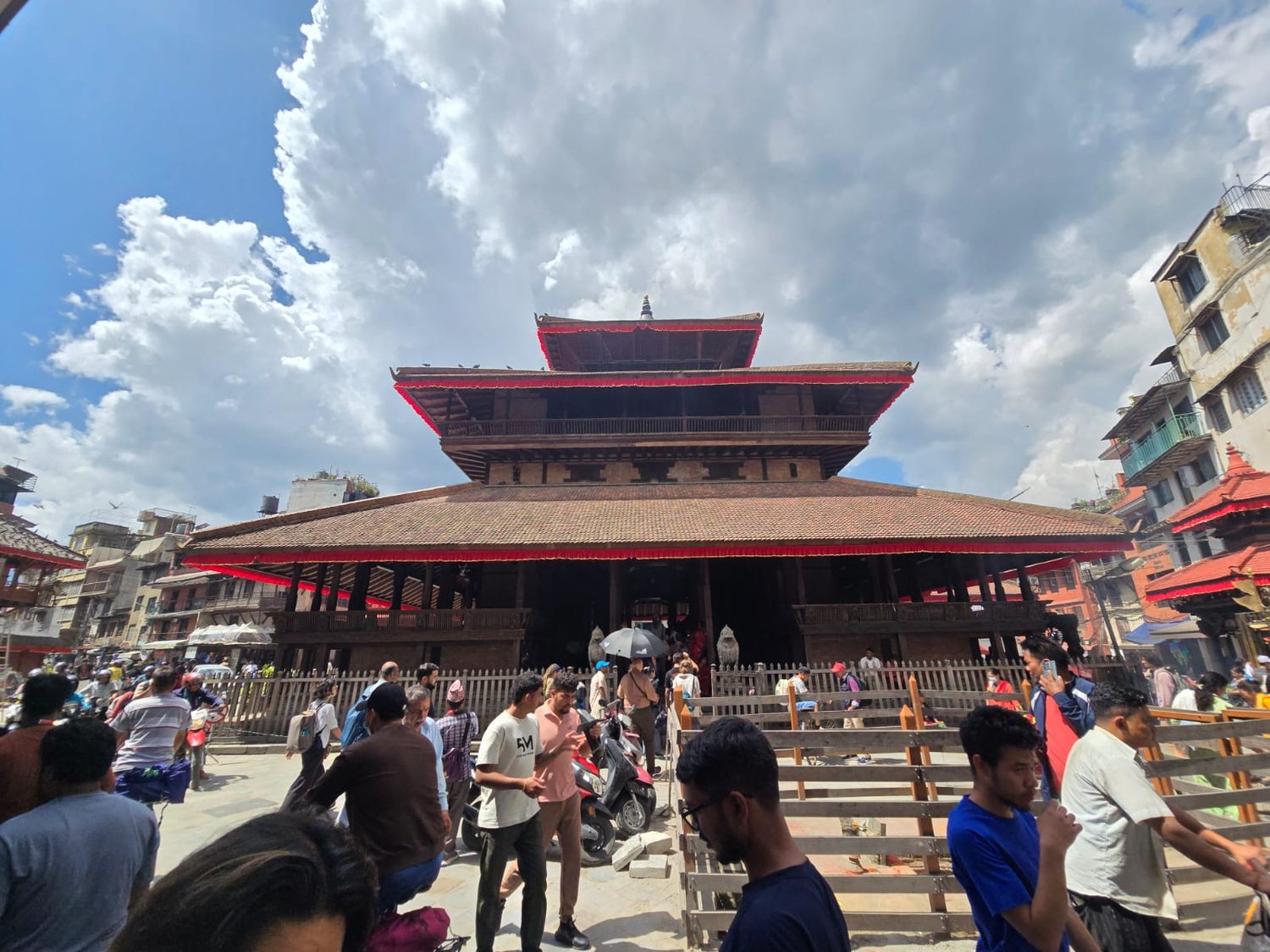
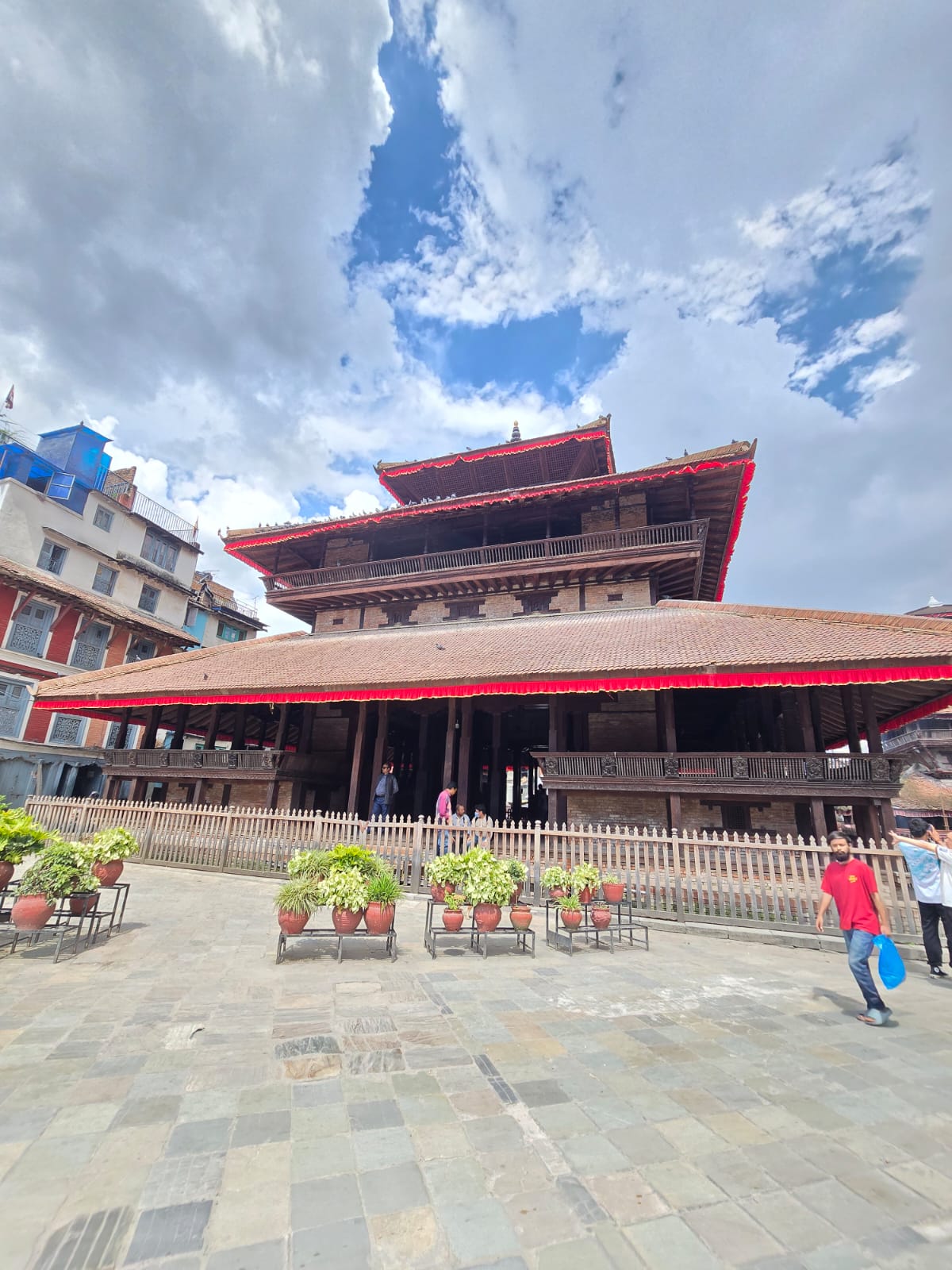
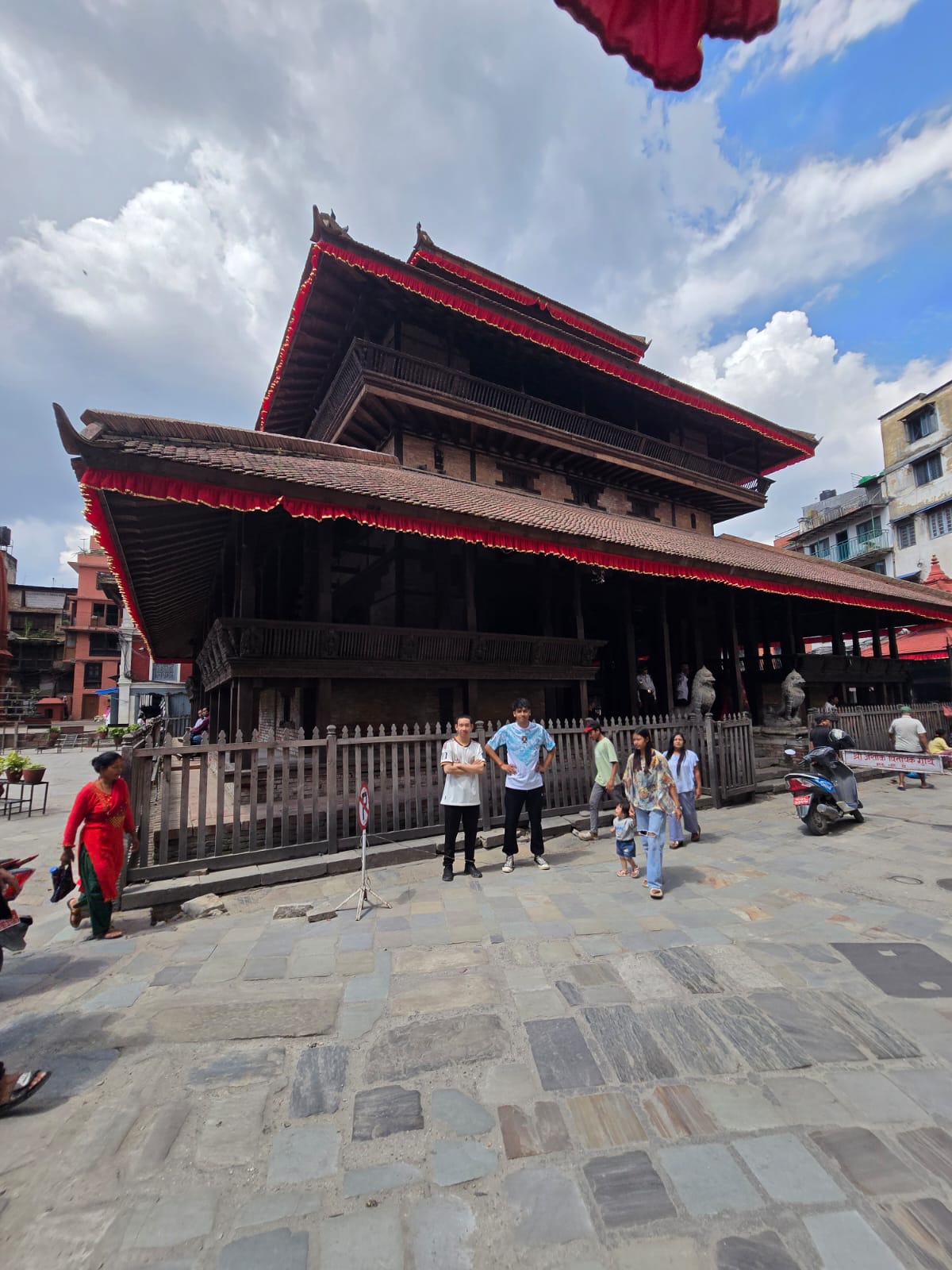
Kasthamandap means ‘wooden pavilion,’ and the city of Kathmandu takes its name directly from this structure. Local legend says it was built from the timber of a single sal tree; historians date the site itself as far back as the 7th century, with the first confirmed written reference appearing in 1143 CE — making it one of the oldest public buildings in the valley. It began life as a rest house and shelter for traders on the India–Tibet route, later becoming a shrine to the ascetic Gorakhnath. The original pavilion collapsed in the 2015 earthquake and has since been carefully rebuilt using traditional techniques and, where possible, salvaged timber.
Stop 3 — Kumari Ghar (home of the Living Goddess)
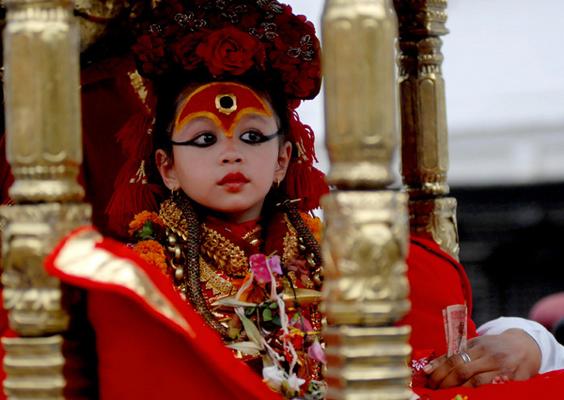
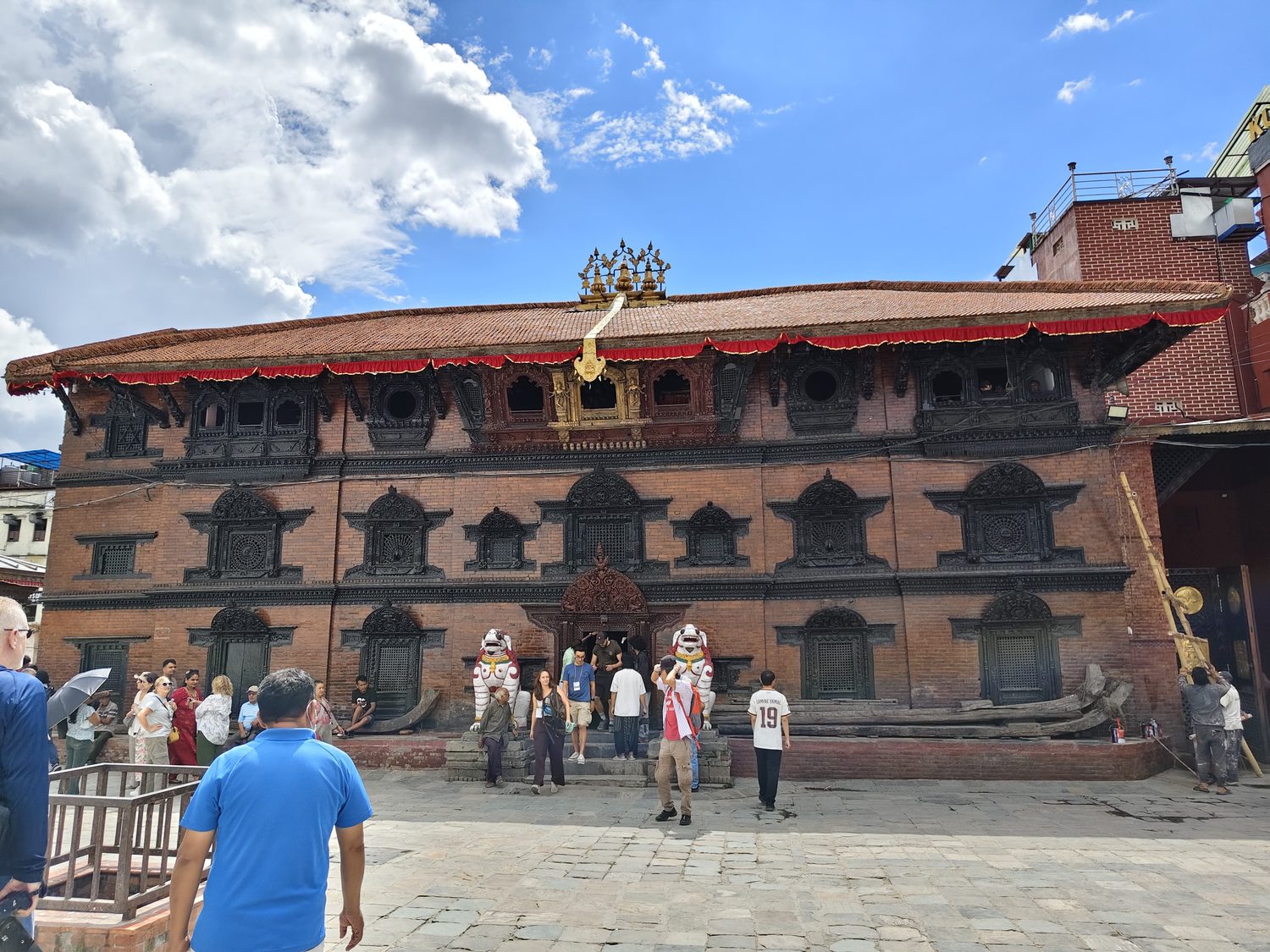
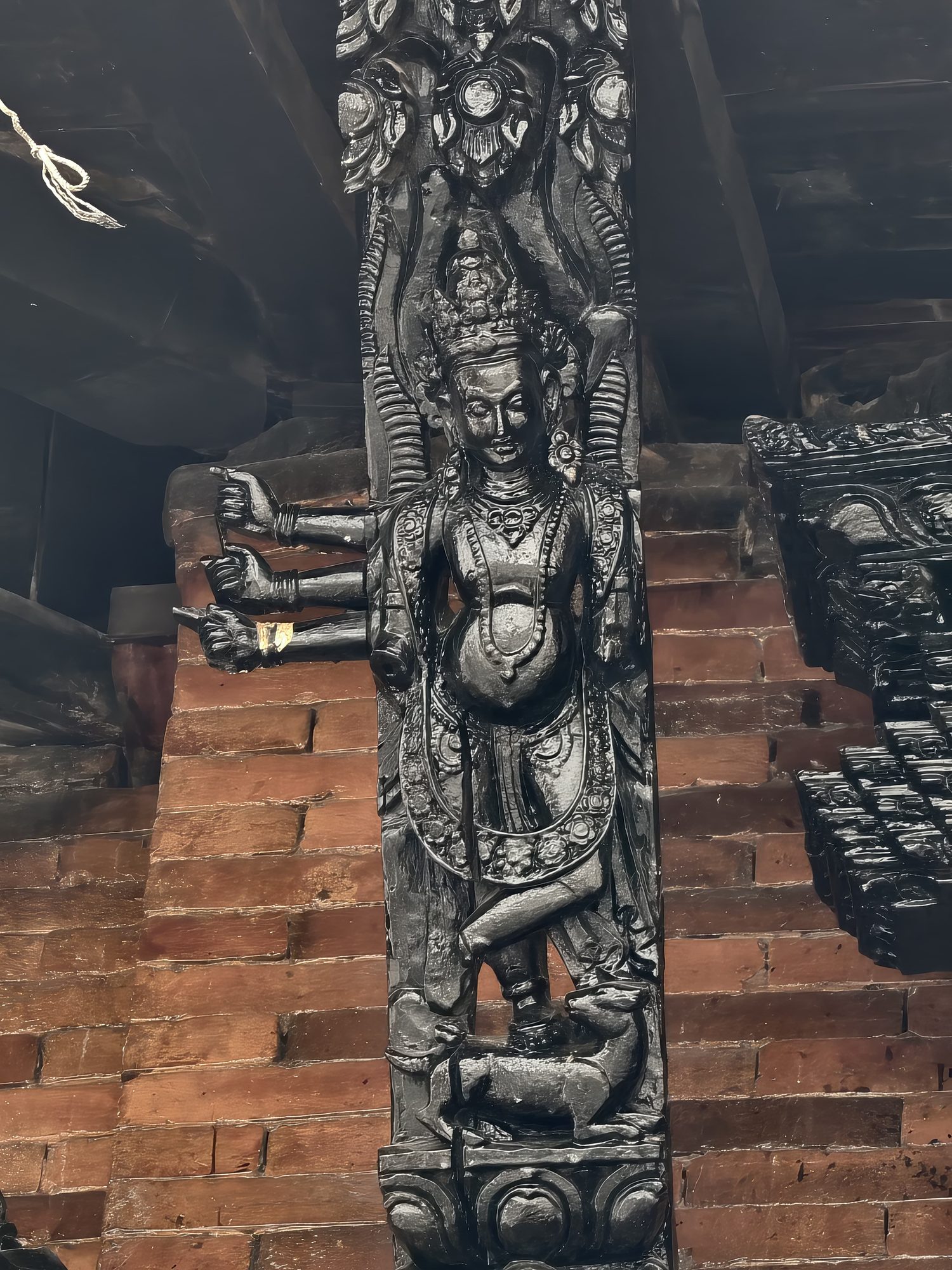
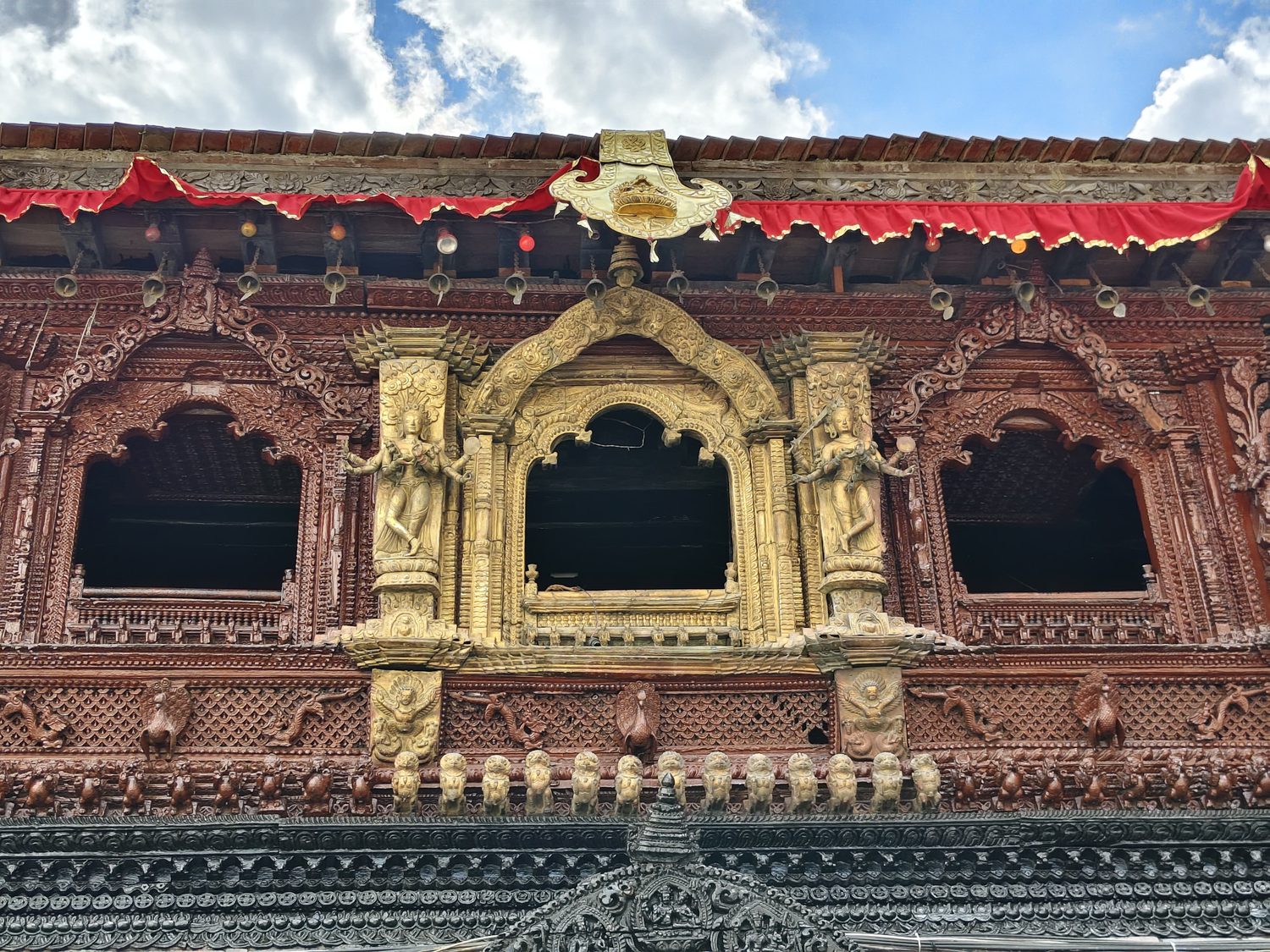
This red-brick, three-storey building is the residence of the Kumari, a young girl worshipped as the living incarnation of the goddess Taleju. It was built in 1757 on the order of King Jaya Prakash Malla. A new Kumari is chosen as a small child from the Newar Shakya community and lives here until she reaches puberty, at which point a successor is selected. Visitors are welcome in the courtyard to admire the carved wooden windows, but only Hindu devotees may enter the inner chambers, and the Kumari herself is only occasionally glimpsed at an upper window.
Stop 4 — Kathmandu Durbar Square & the Nine Storey Palace (UNESCO World Heritage Site)
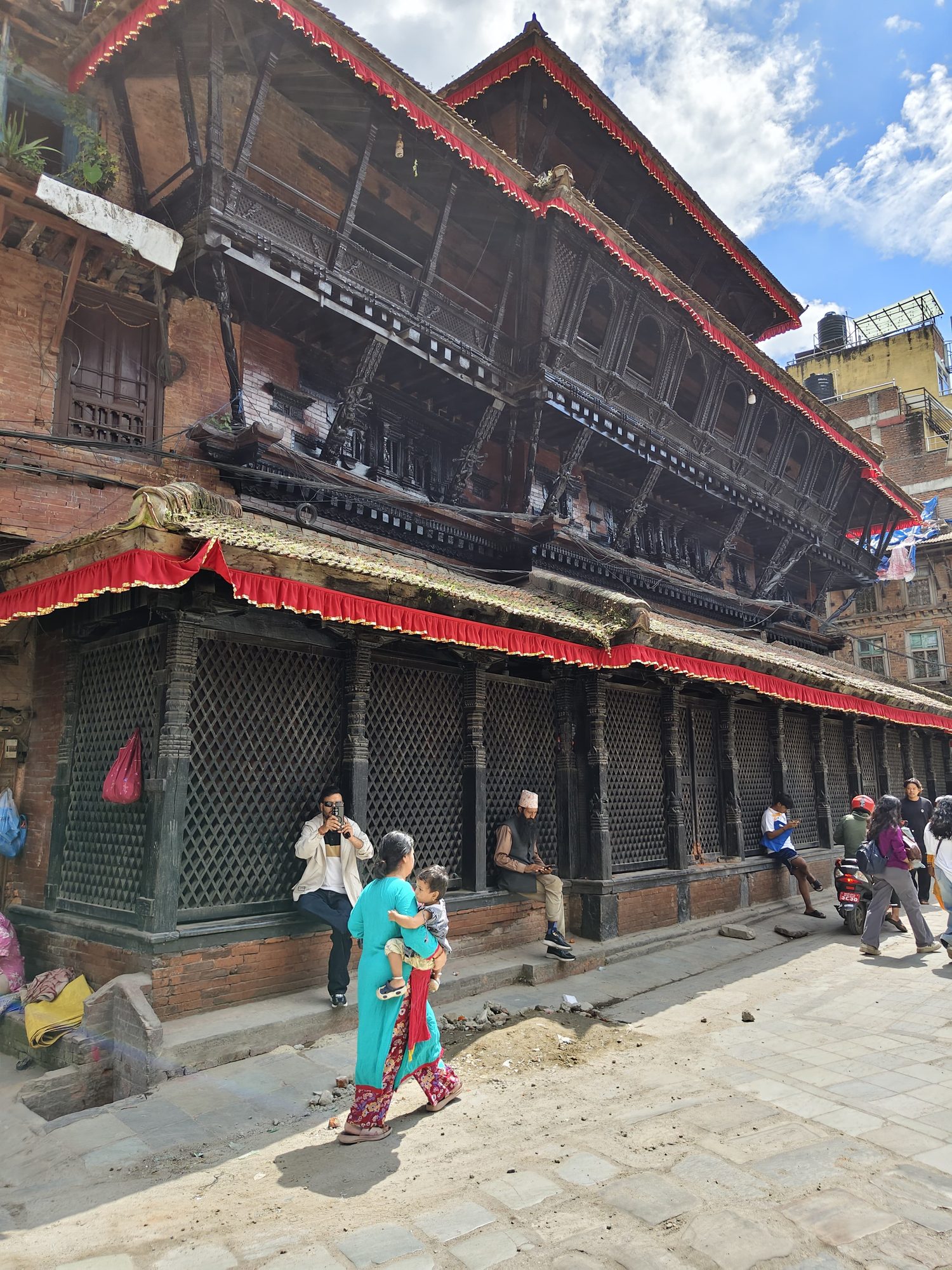
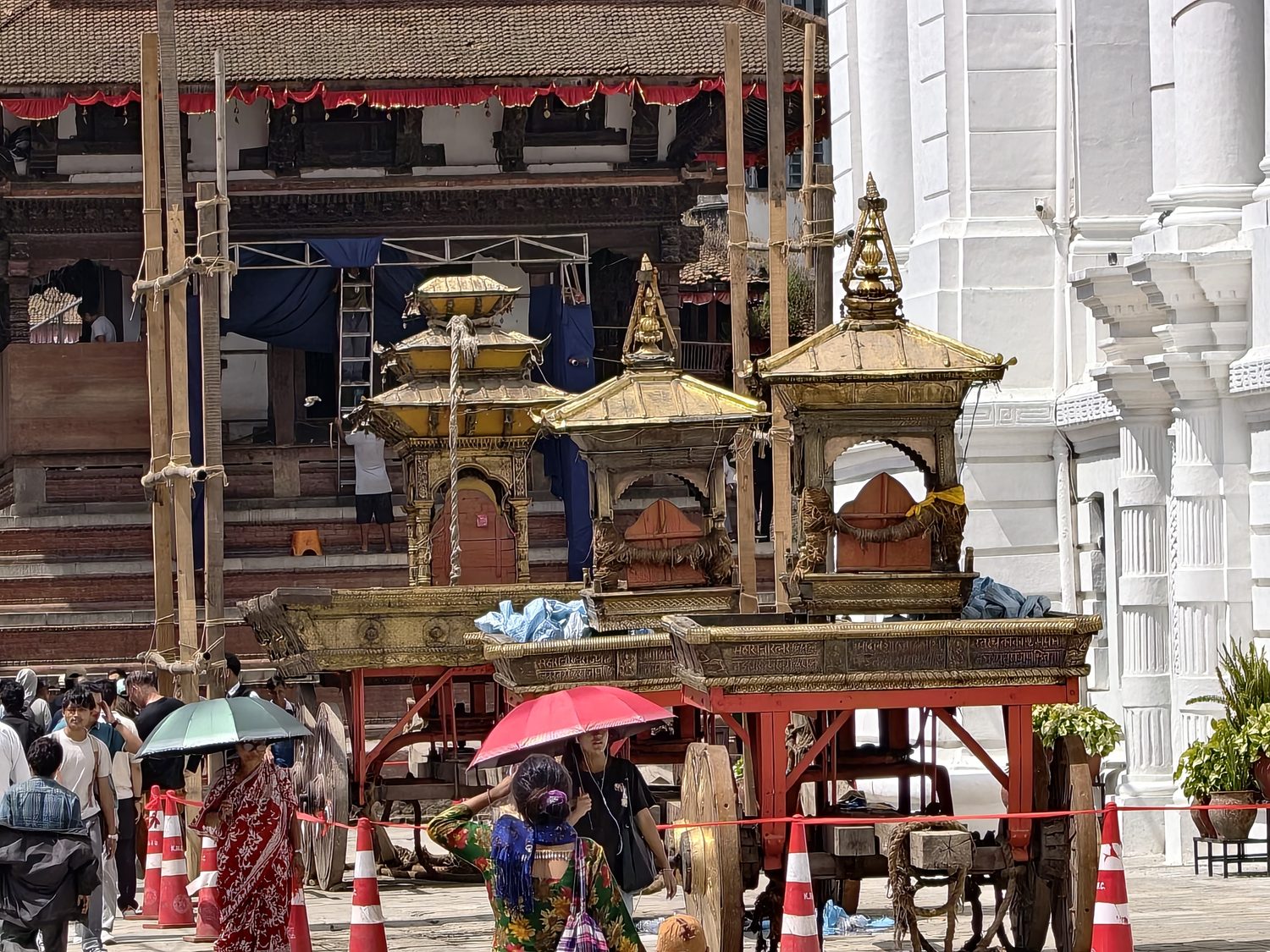
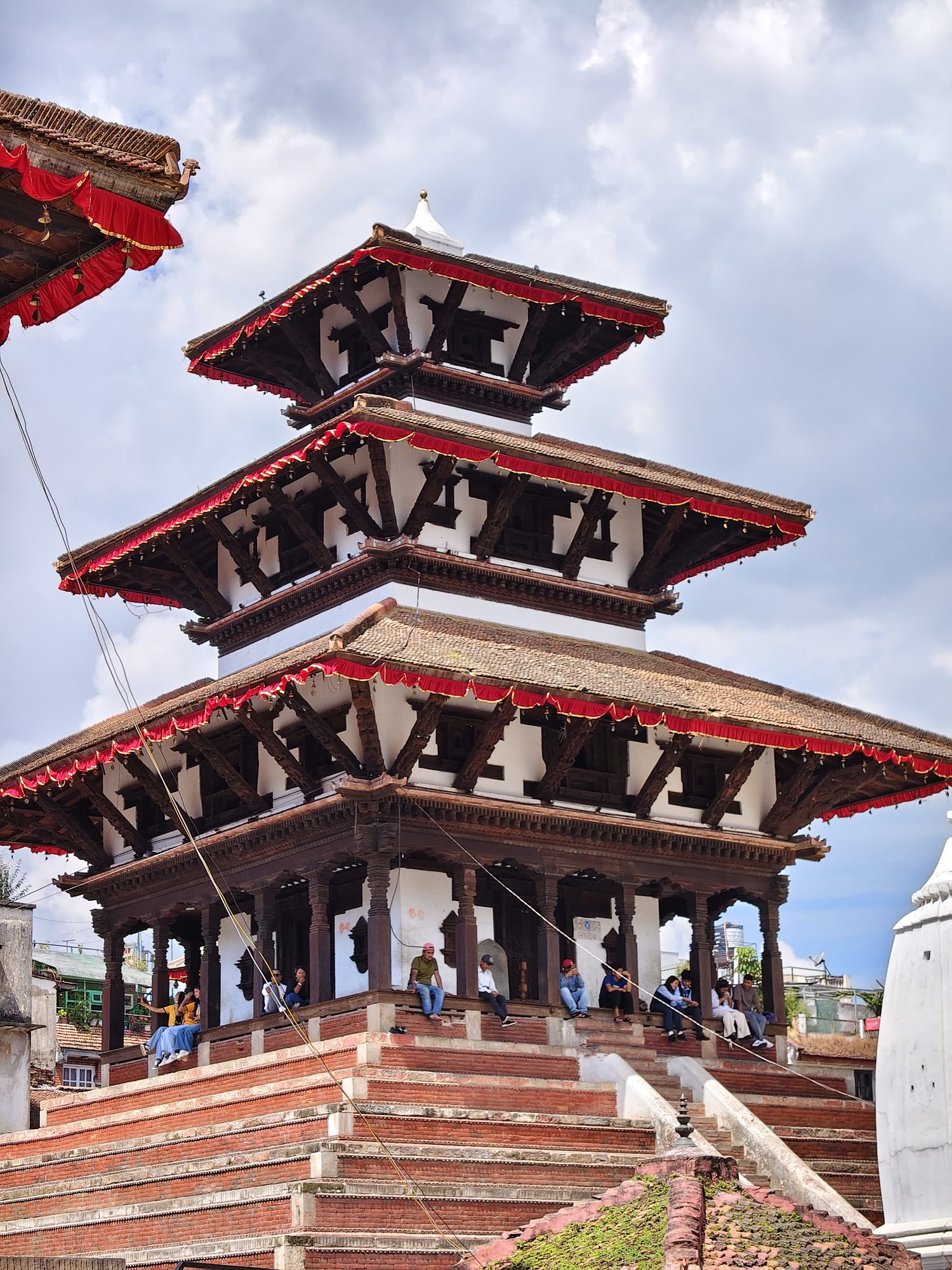
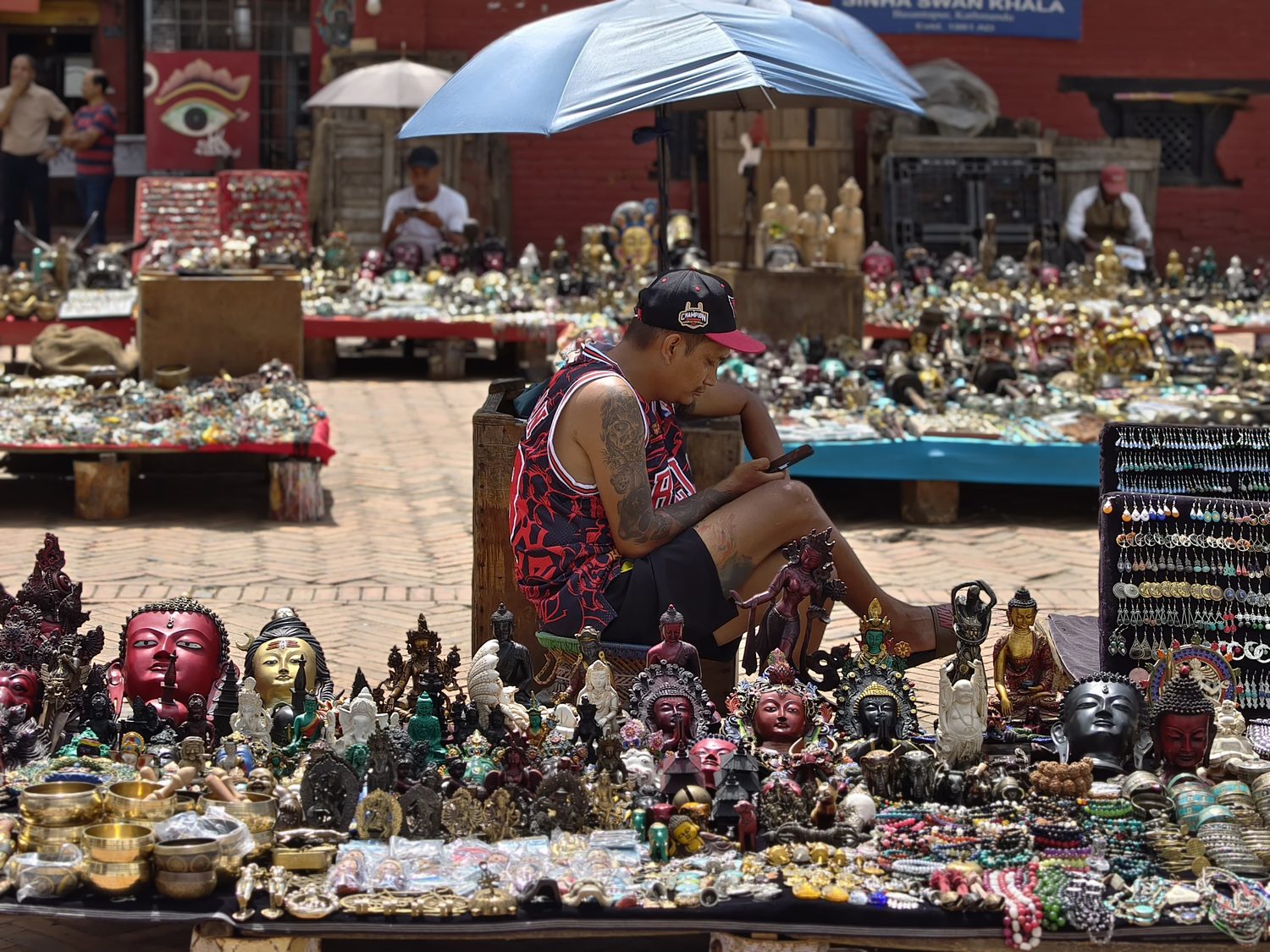
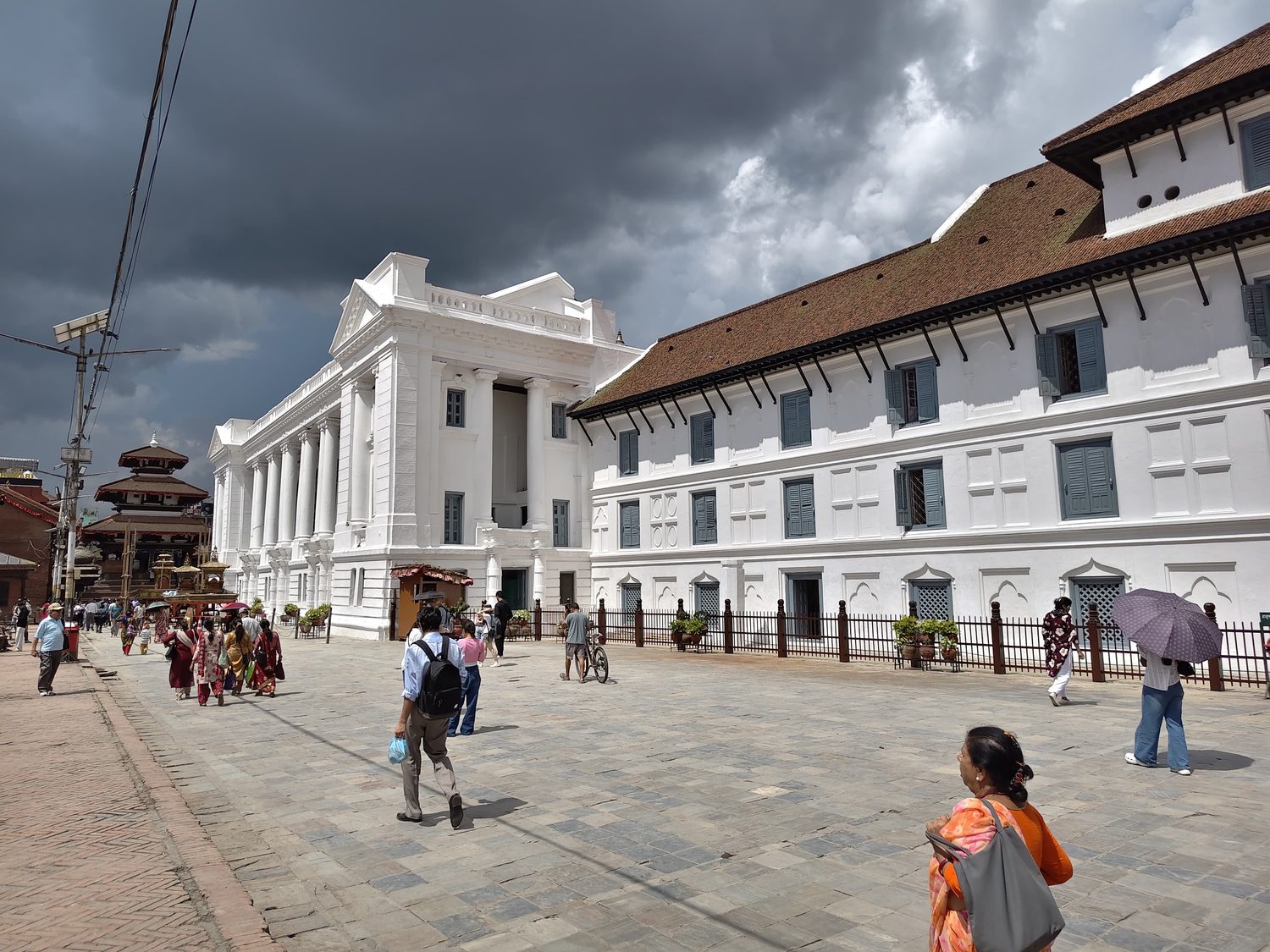
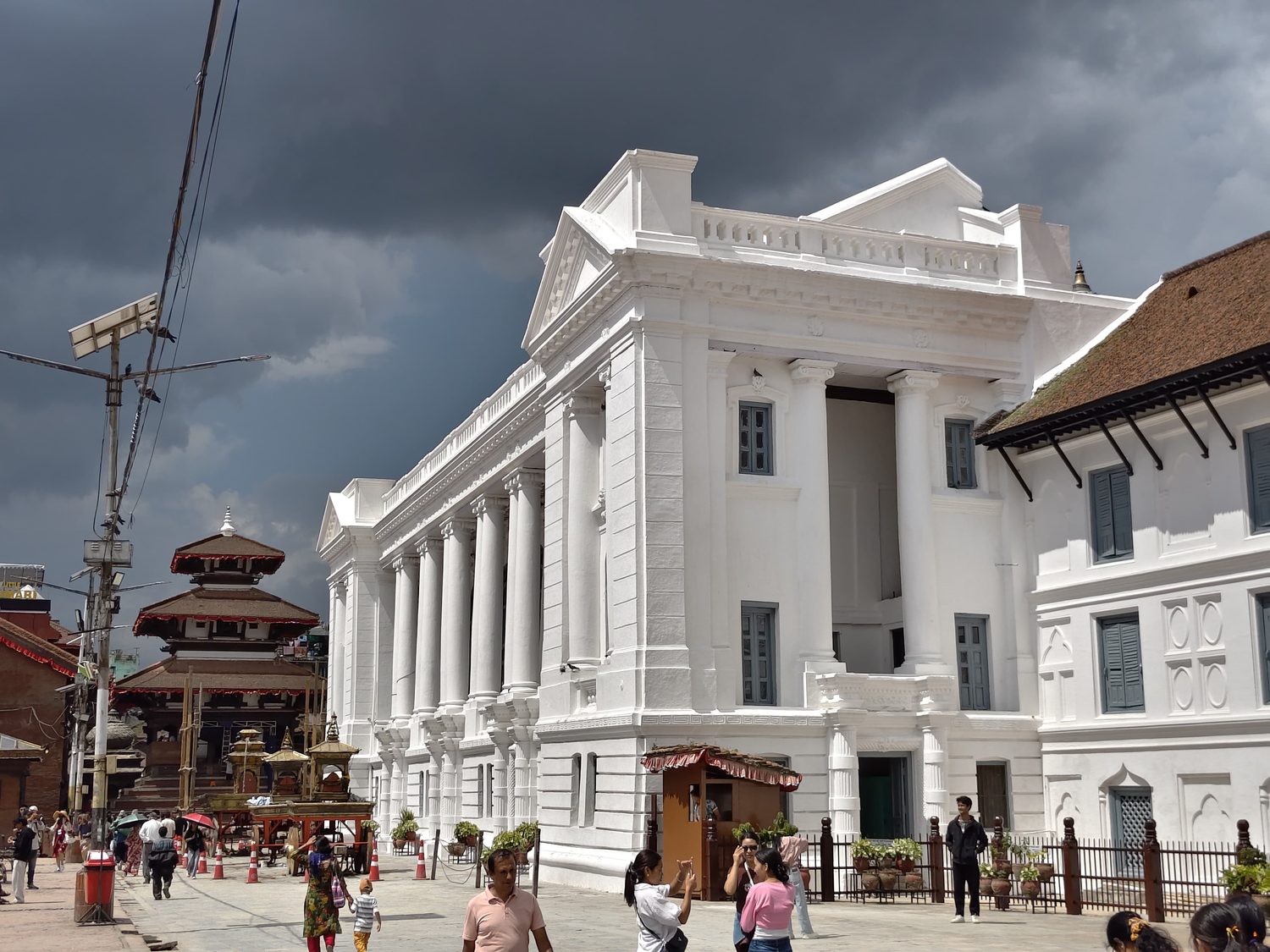
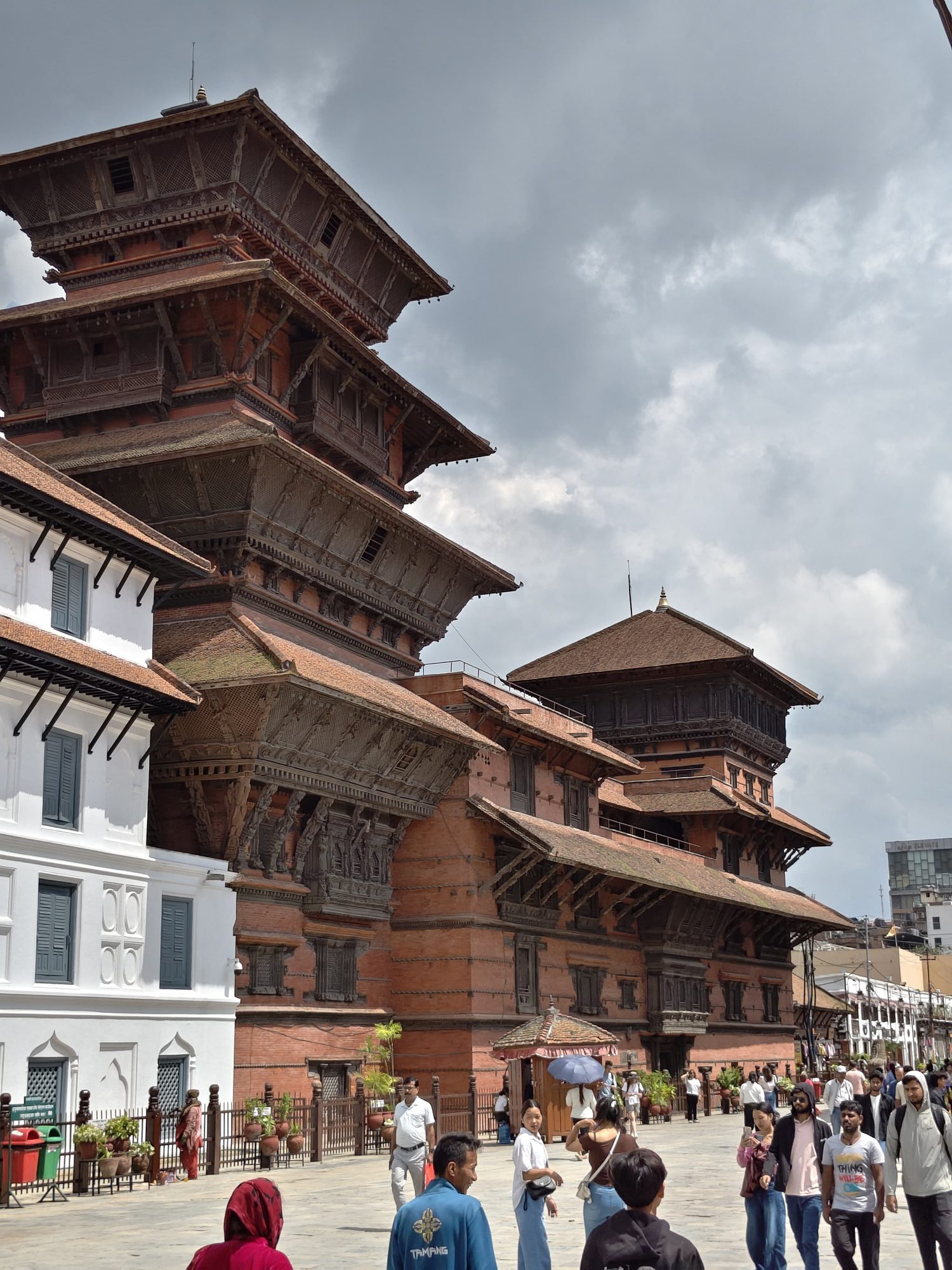
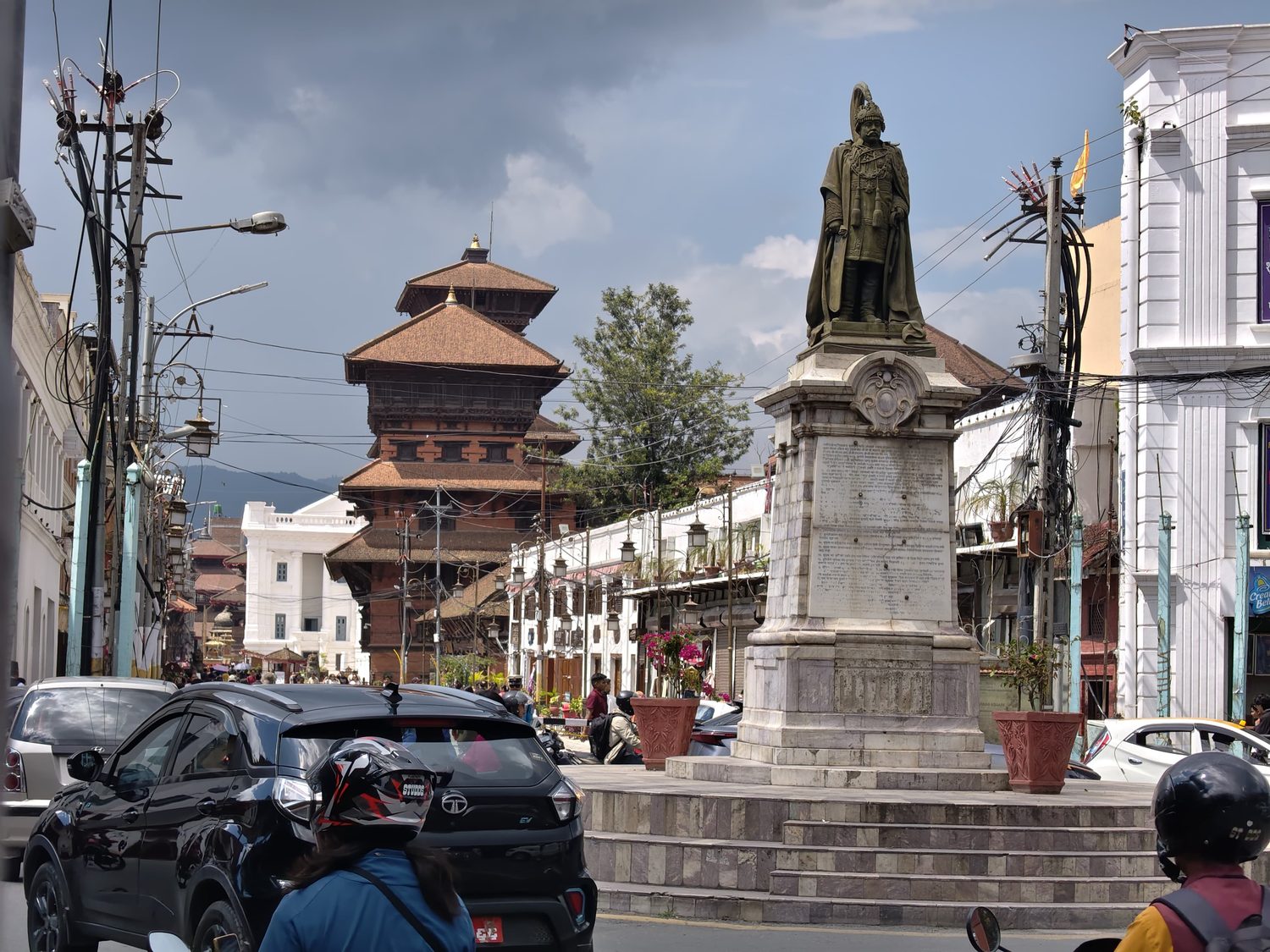
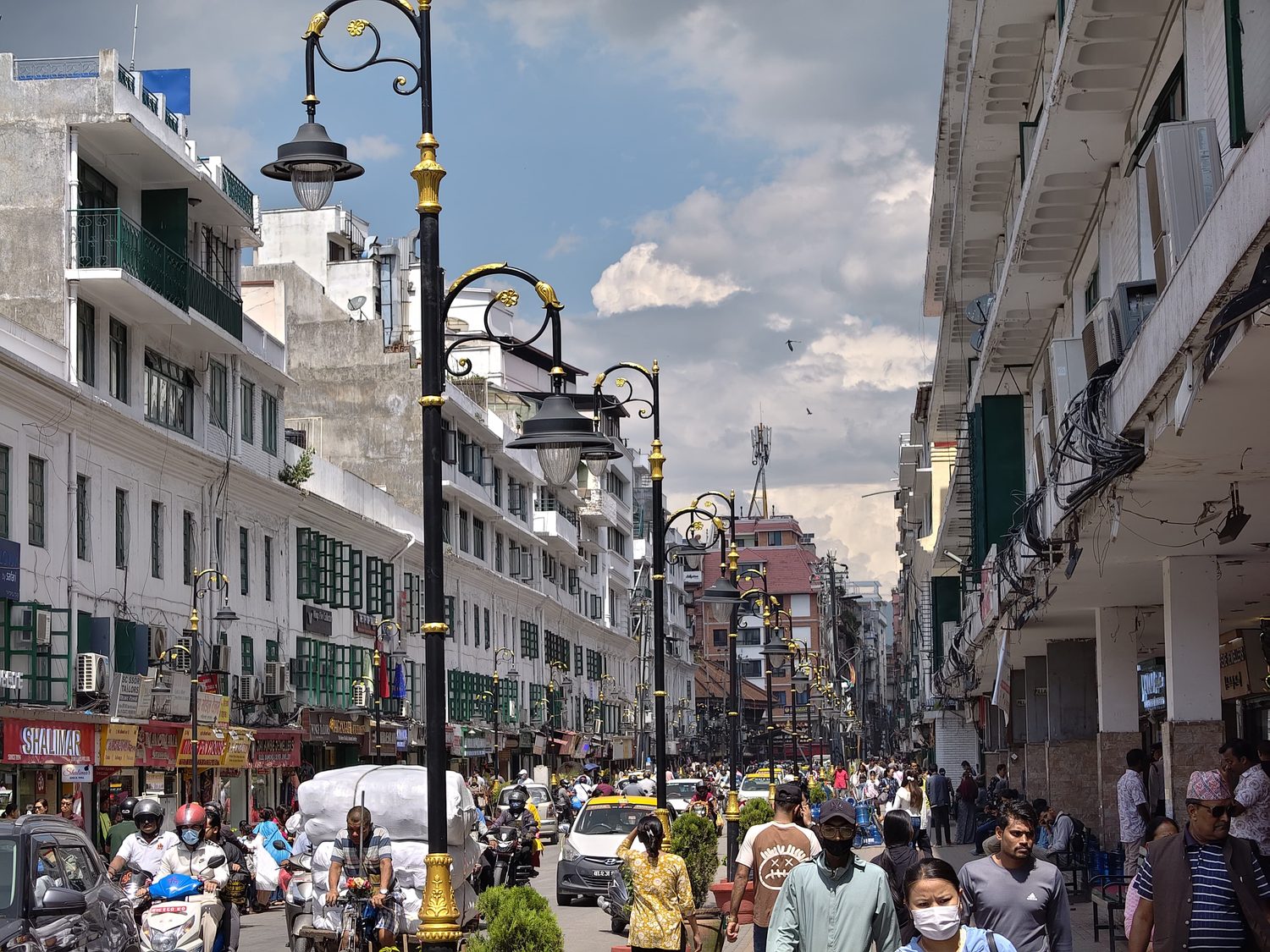
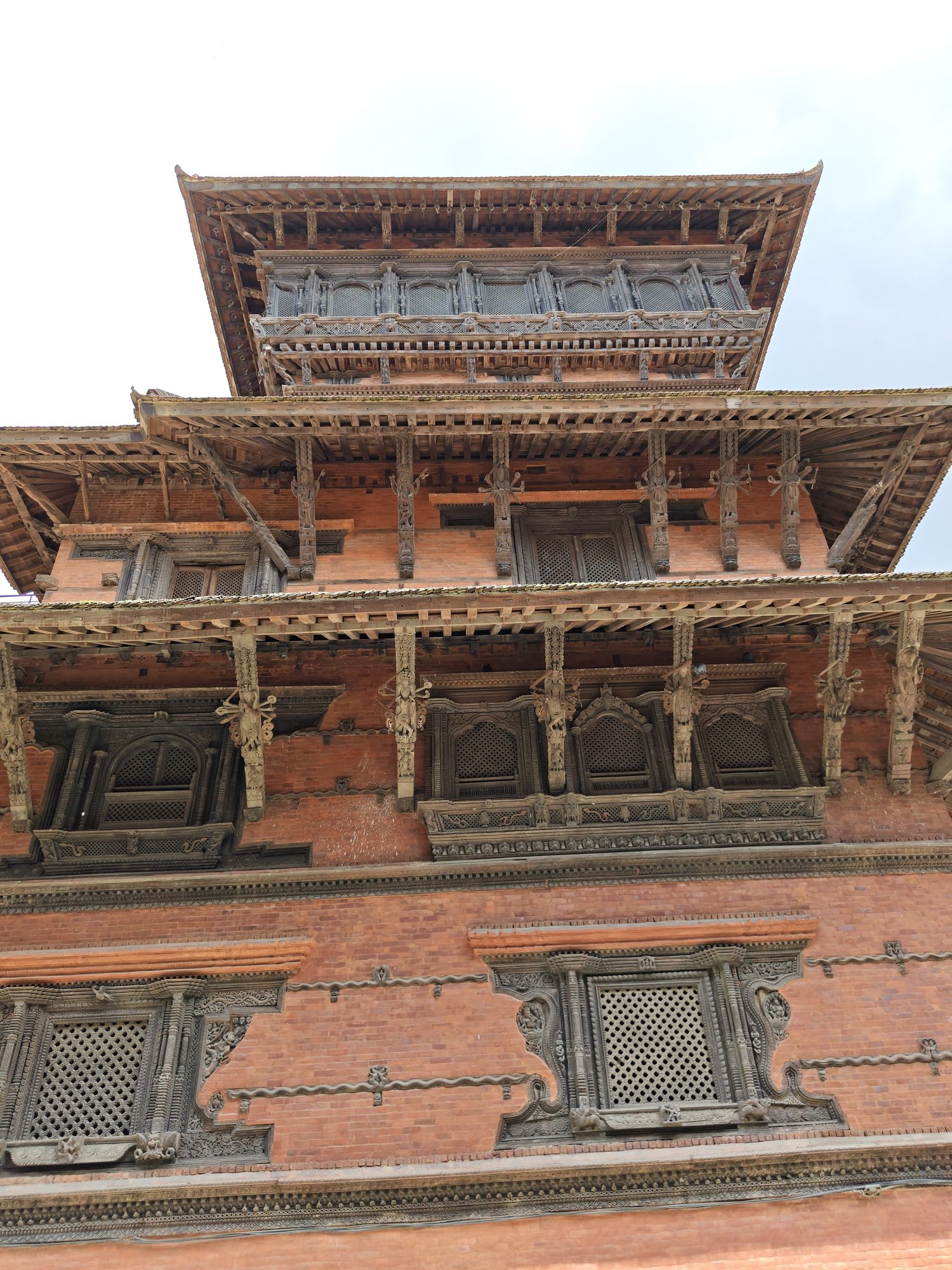
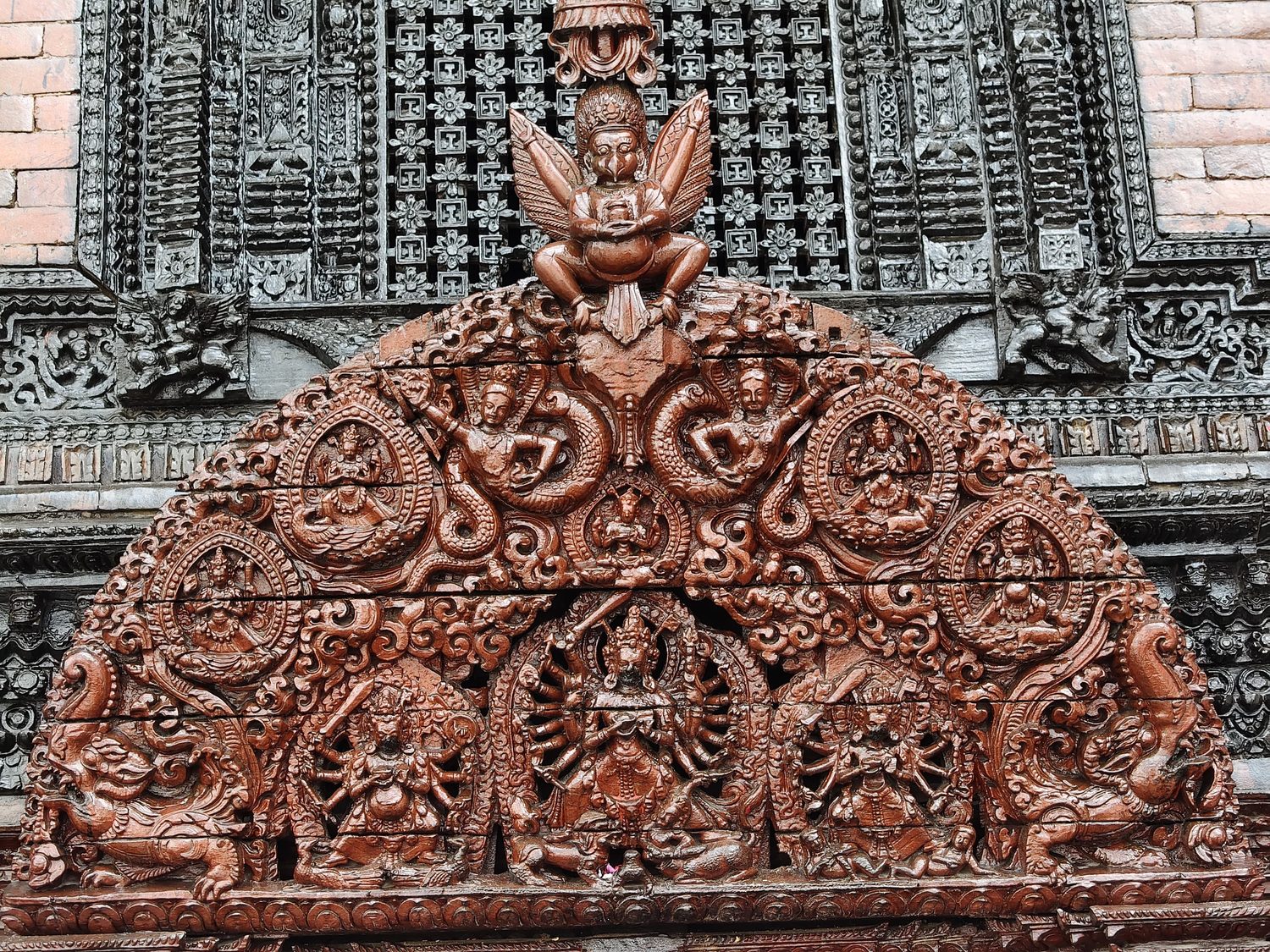
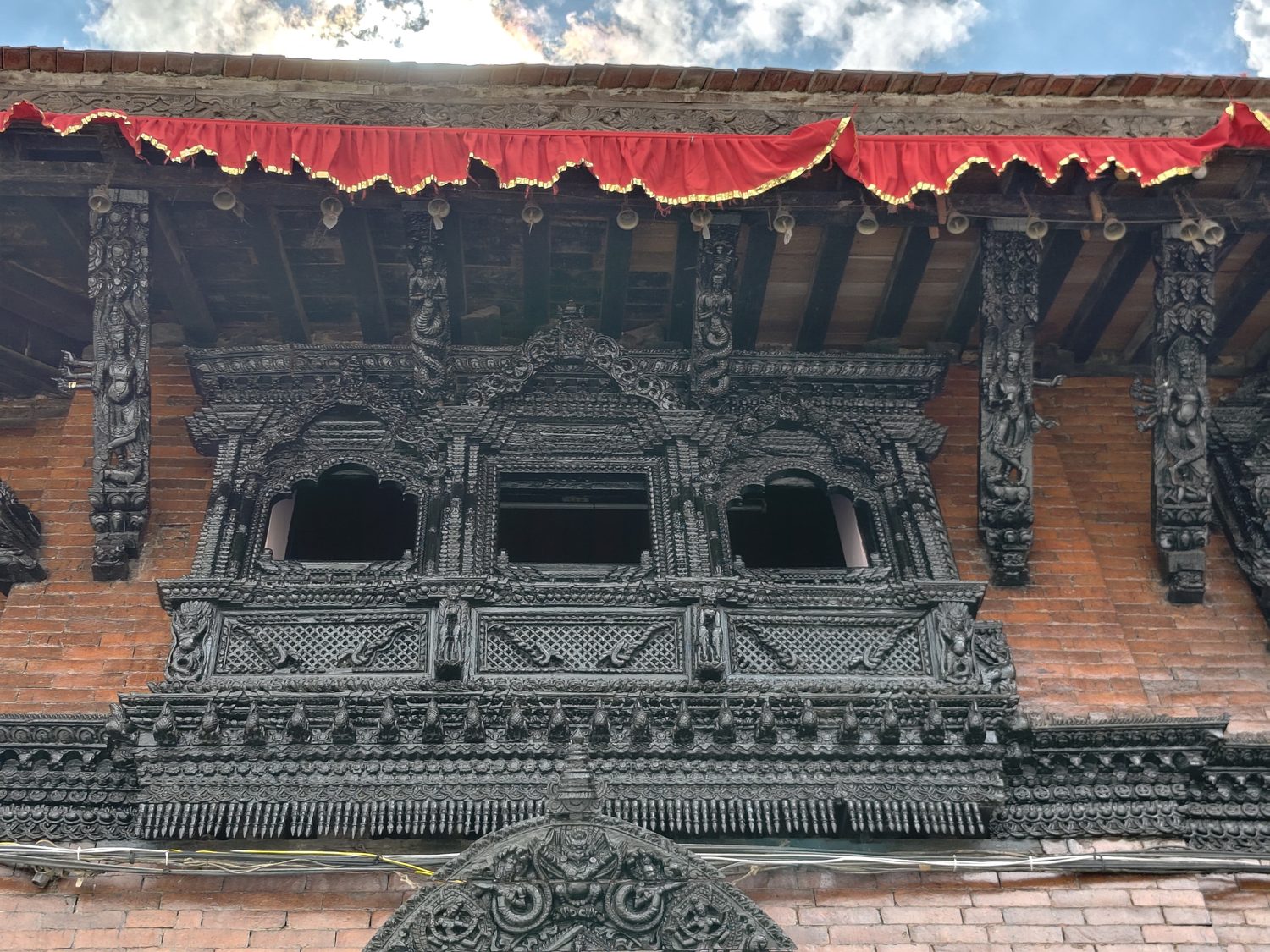
This plaza was the royal seat of the Kathmandu kings for over five centuries, first under the Malla dynasty and later the Shah dynasty, who ruled from here until 1896. It’s part of a UNESCO World Heritage Site and is packed with temples, courtyards, and carved facades built mostly in the 16th and 17th centuries under Malla patronage. The tallest structure in the square is the Nine Storey Palace (also called Basantapur Tower or Nautale Durbar), built by King Prithvi Narayan Shah to mark his unification of Nepal in the 18th century. It doubled as a royal residence and a watchtower for the city below.
Stop 5 — Kal Bhairav (The Guardian Deity of Kathmandu)
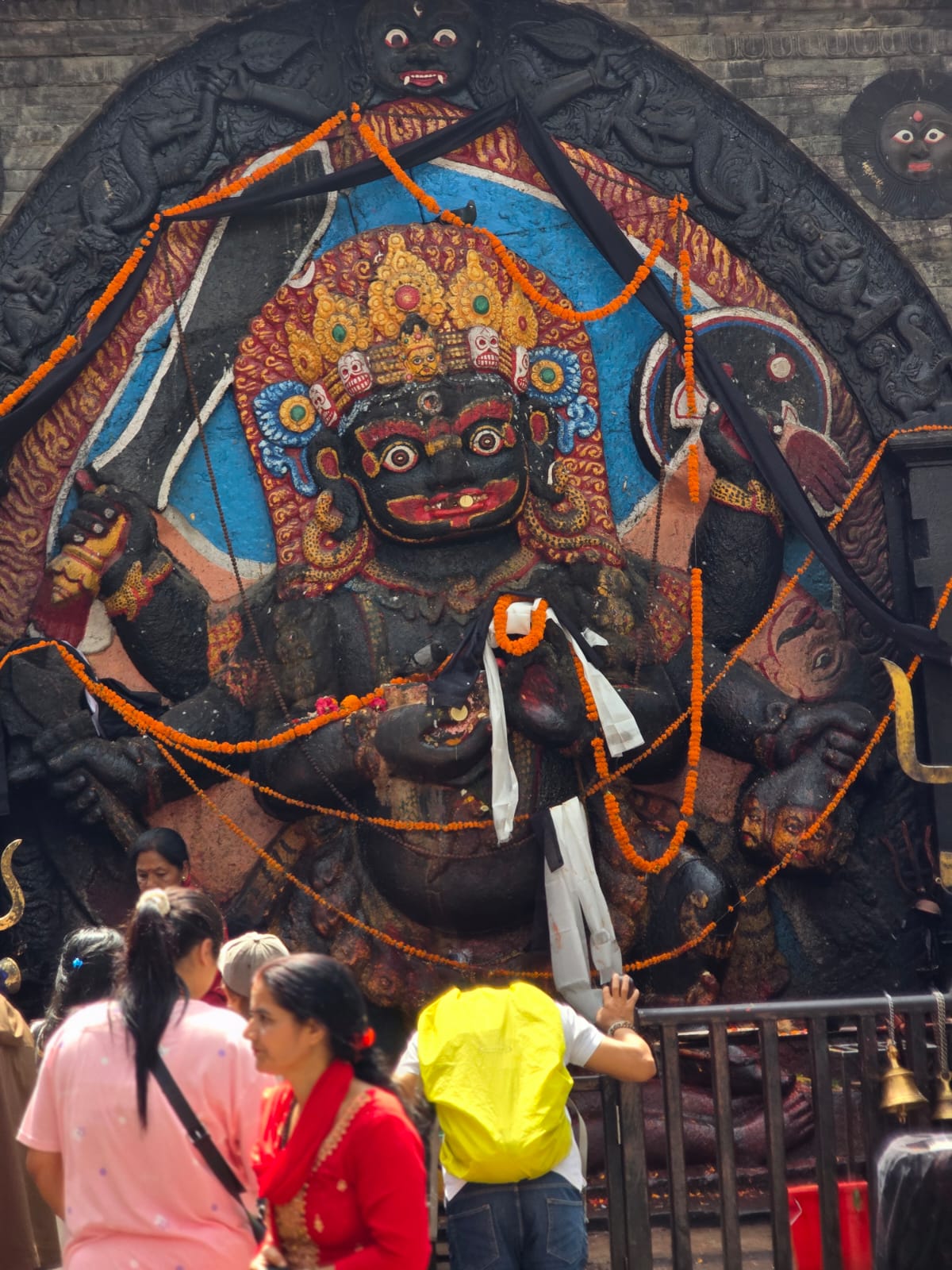
Along the route through the old palace area, continue about 150 meters toward the northern side. There is the huge statue of Kal Bhairav which is a powerful and important deity in Kathmandu’s traditional culture. The statue is especially revered as a protector. Locals and visitors come here to pay their respects and experience this historic and religious site.
Stop 6 — Taleju Bhawani Temple (the Malla kings’ royal goddess)
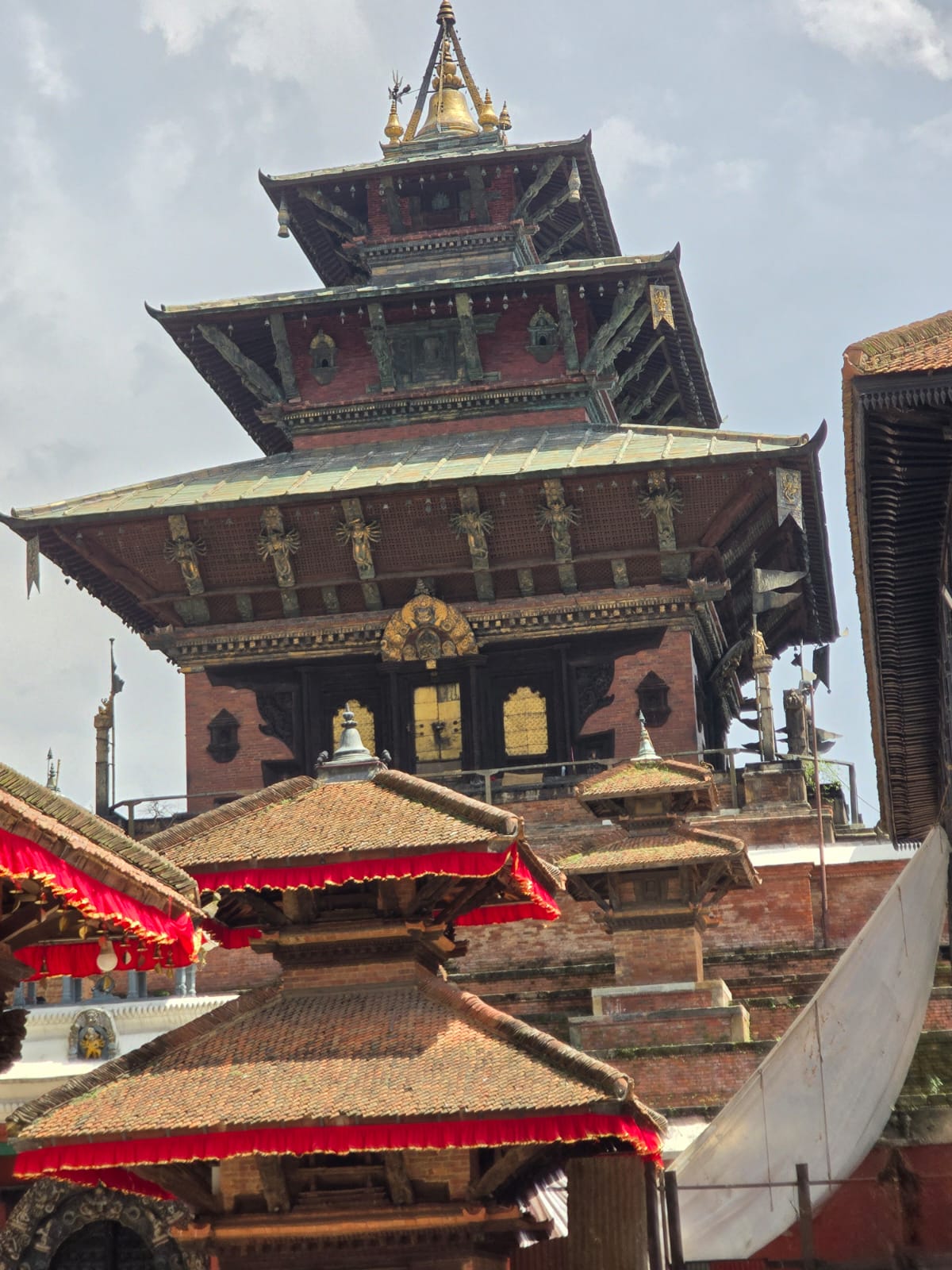
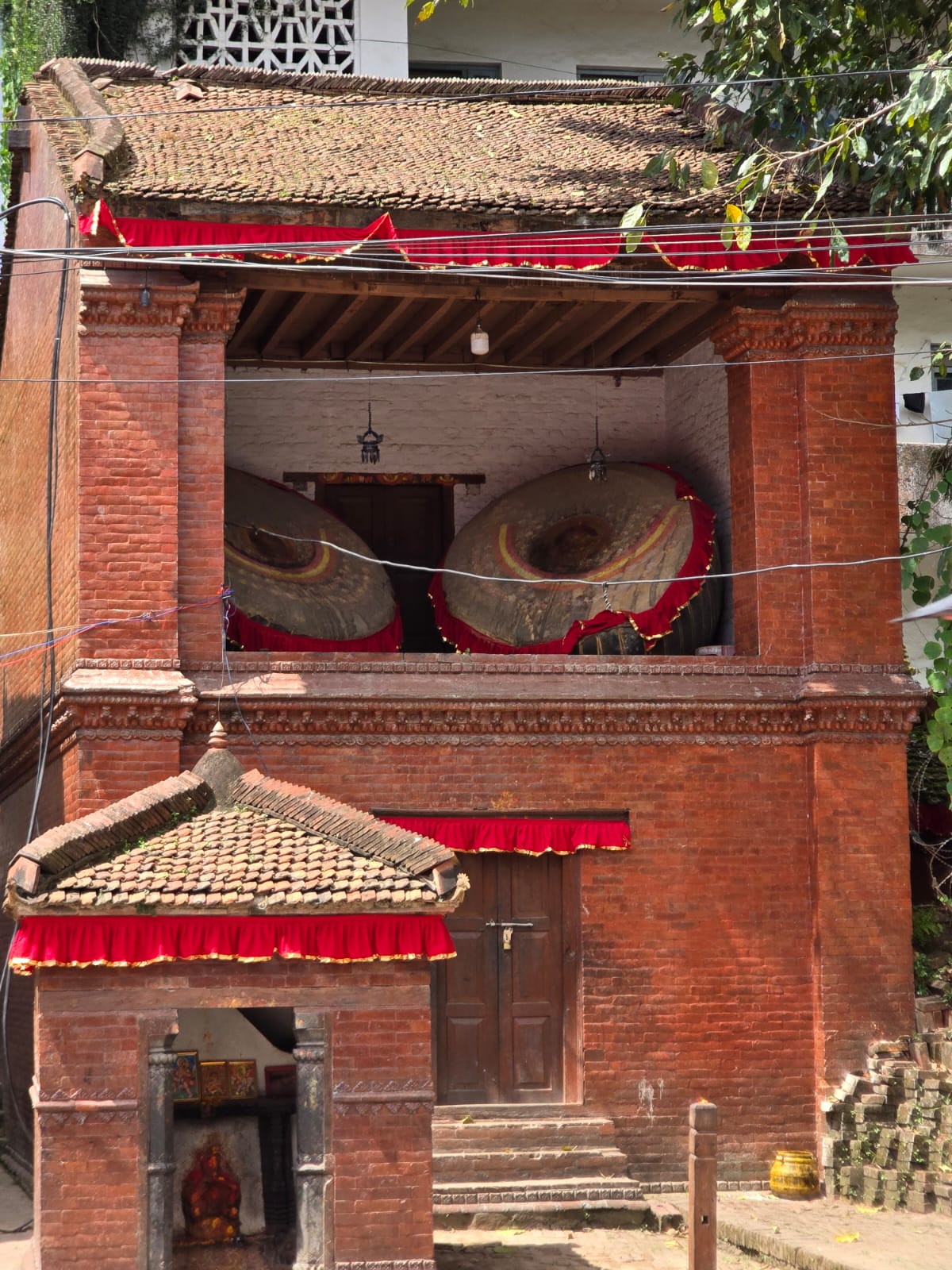
Rising above the northeast corner of Durbar Square on a 12-tiered plinth, this is the tallest temple in the square at roughly 35 metres. It was built in 1564 by King Mahendra Malla for Taleju Bhawani, the patron goddess of the Malla dynasty. According to legend, Taleju once visited the king nightly in human form to advise him, until one king overstepped — after which she chose instead to manifest as a young girl, giving rise to the Kumari tradition next door. The temple is closed to the public for all but one day a year, during the Dashain festival, when Hindu visitors may briefly enter.
Stop 7 — Indrachowk & Potey Bazar (temple square and bead market)
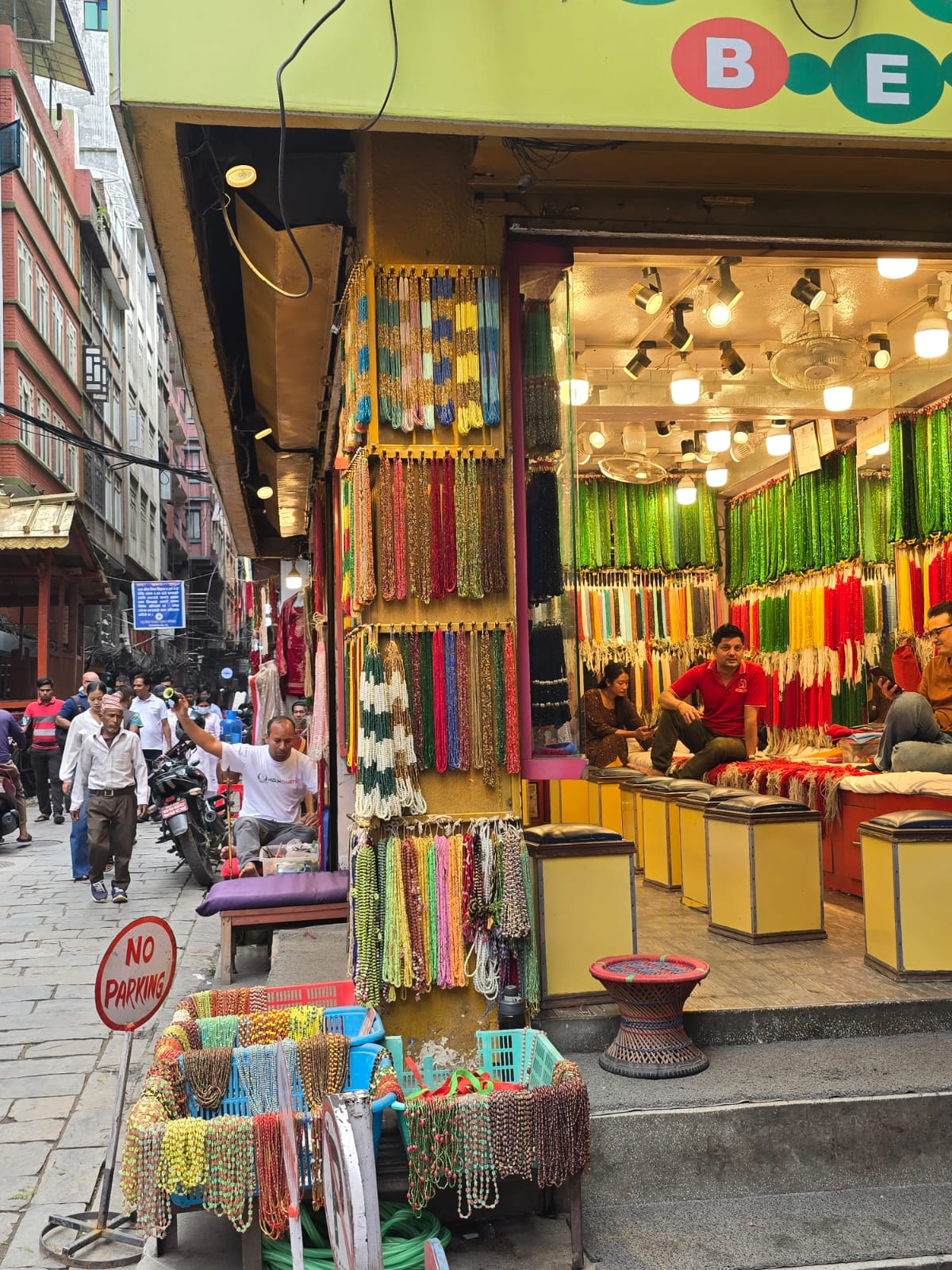
Indrachowk is a lively junction anchored by the Akash Bhairav Temple, dedicated to the ‘Sky God’ — a deity linked to the legendary Kirati king Yalambar, said to have ruled the valley around 3,000 years ago. During the Indra Jatra festival, the temple’s mask is put on public display and paraded through the streets. The square is also known as Potey Bazar for its rows of shops selling potey — the colourful glass beads traditionally used for Nepali wedding necklaces — alongside pashmina and textiles.
Stop 8 — Janabahal — Seto Machindranath Temple/ Machindranath Temple
(compassion deity shared by two faiths)
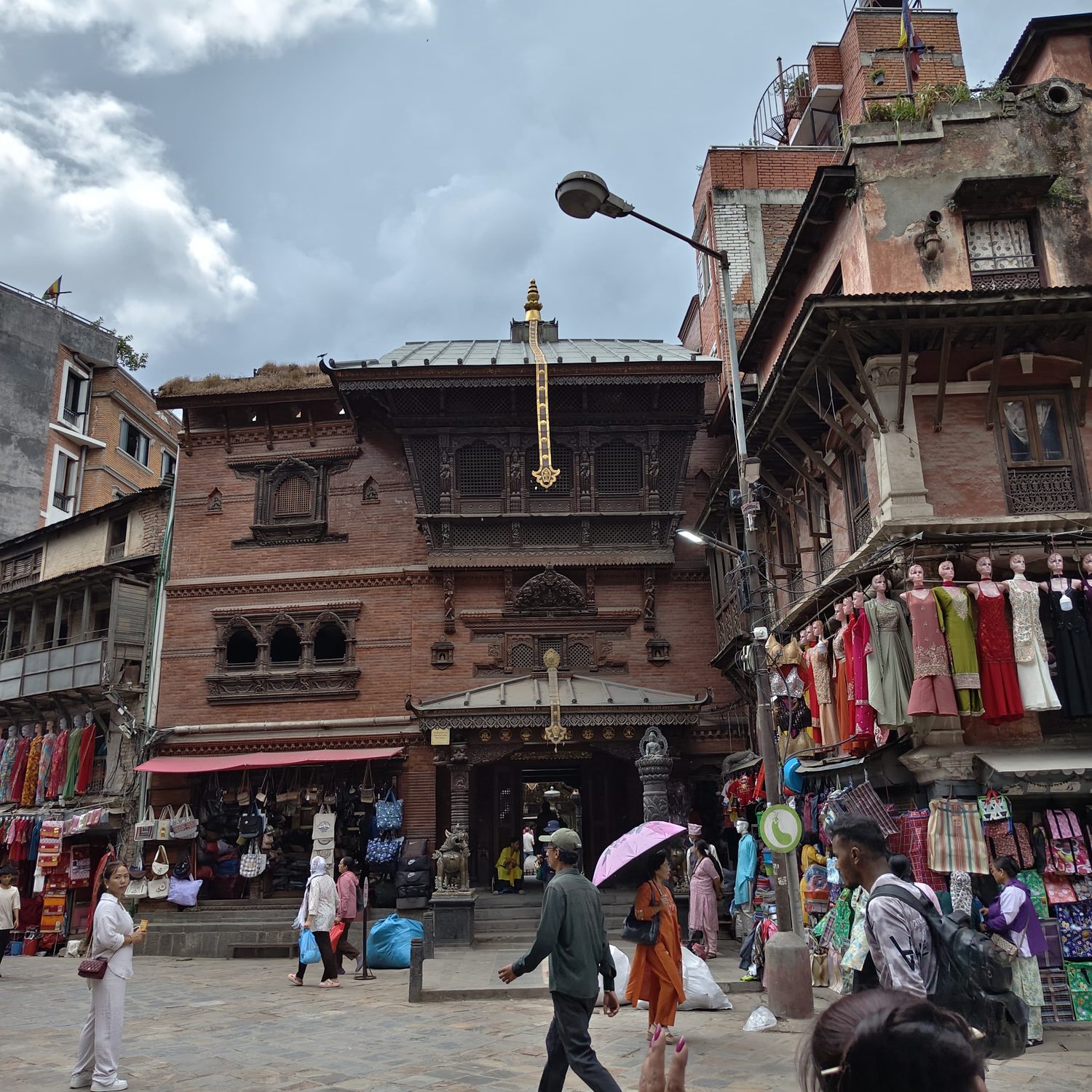
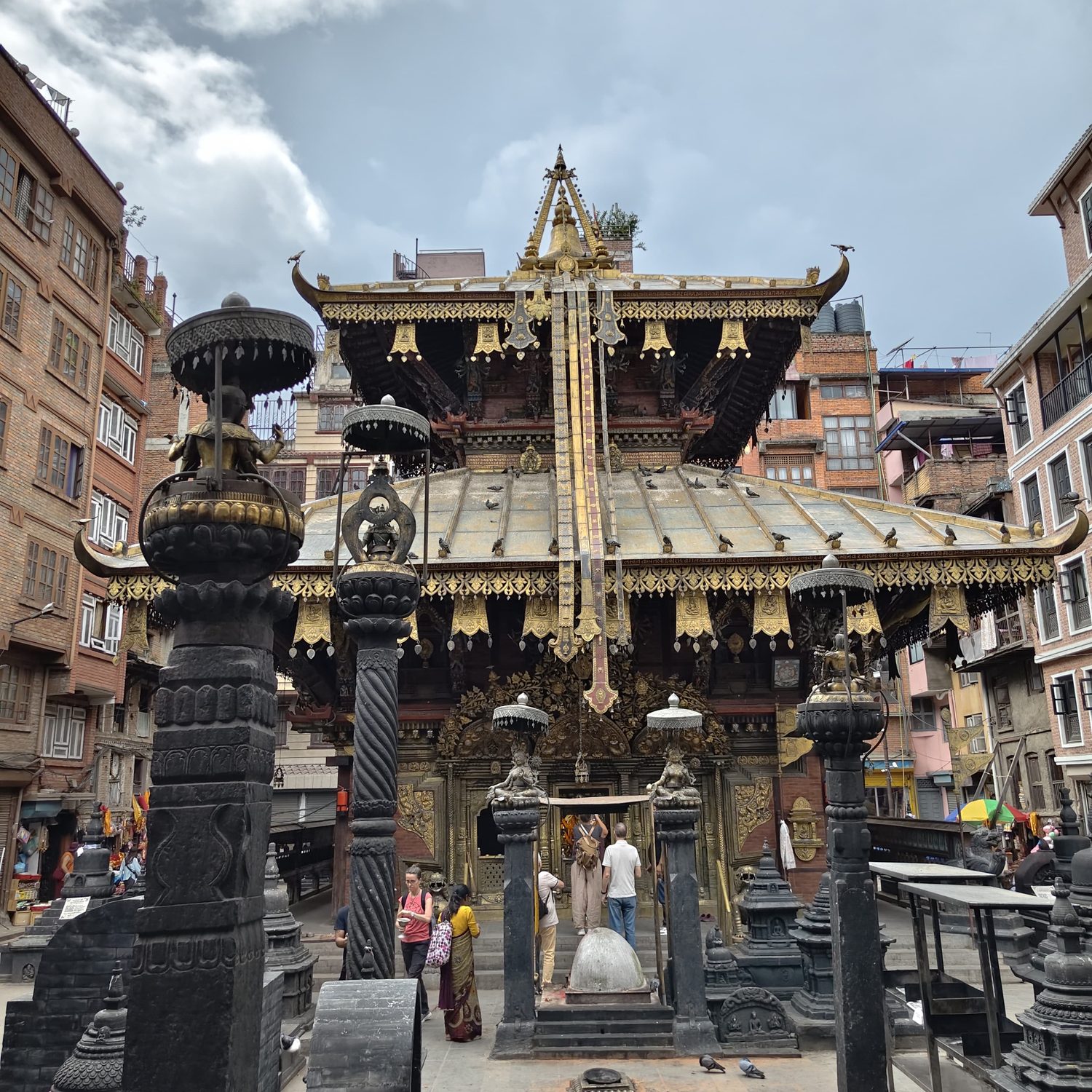
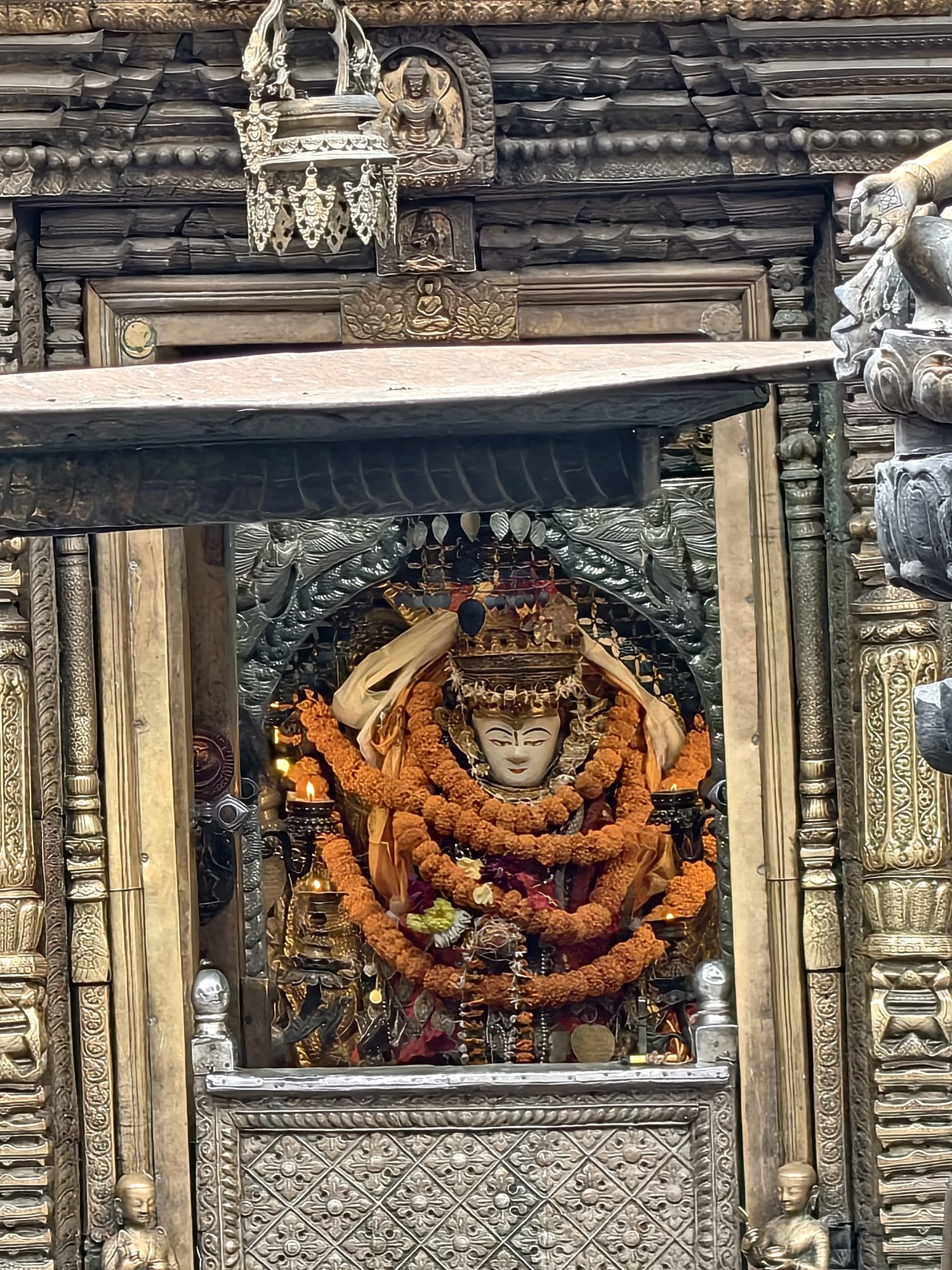
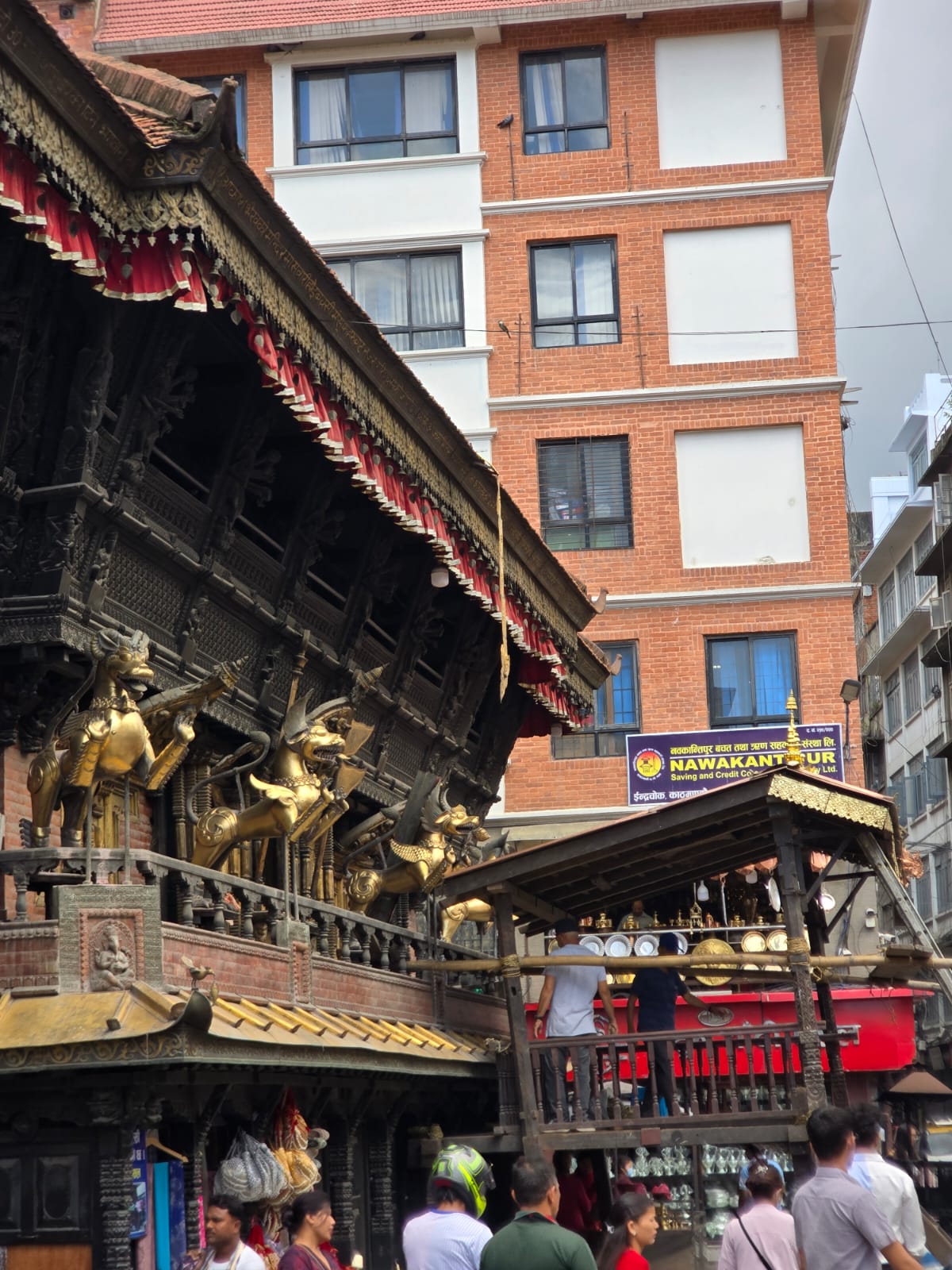
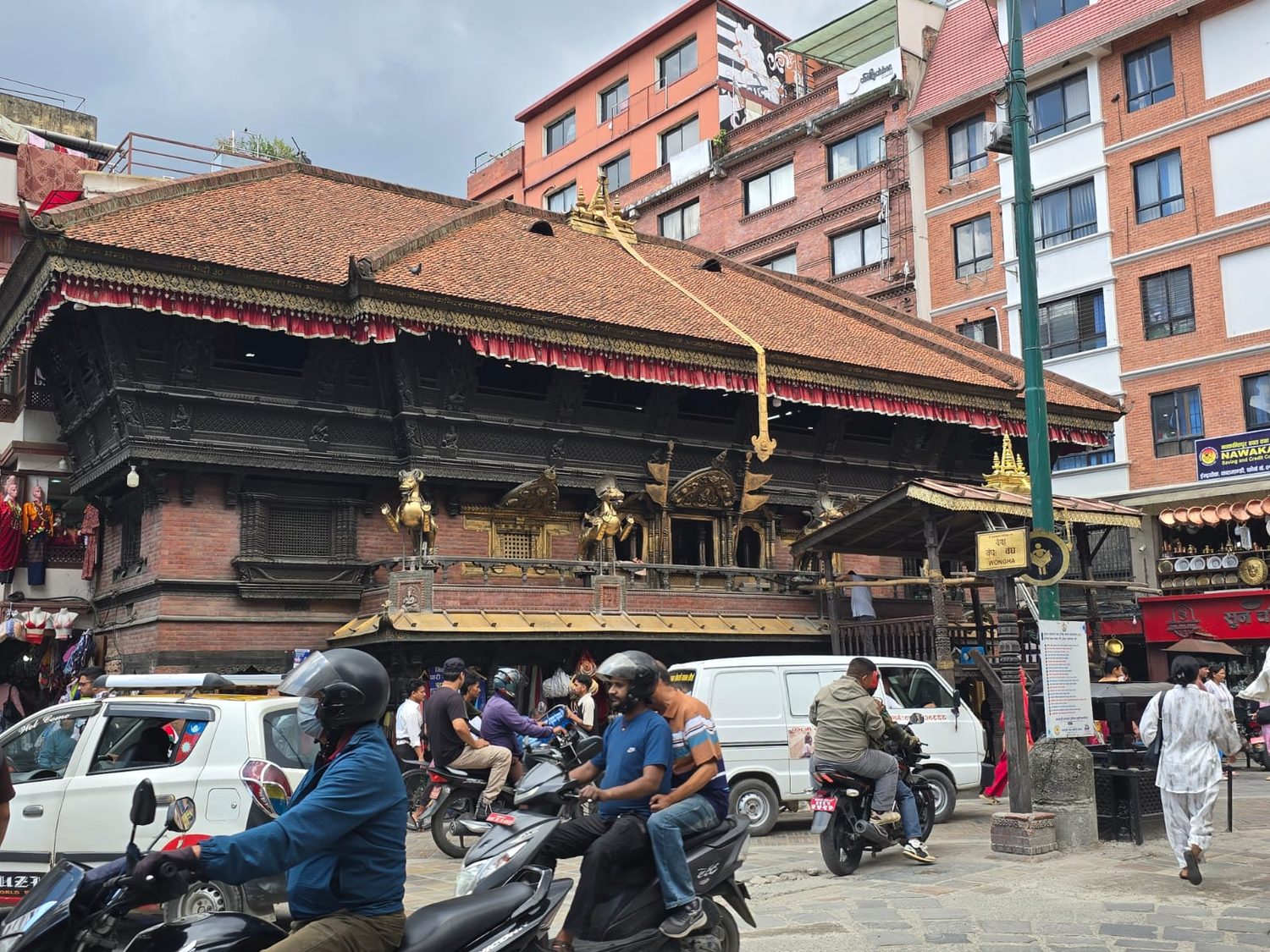
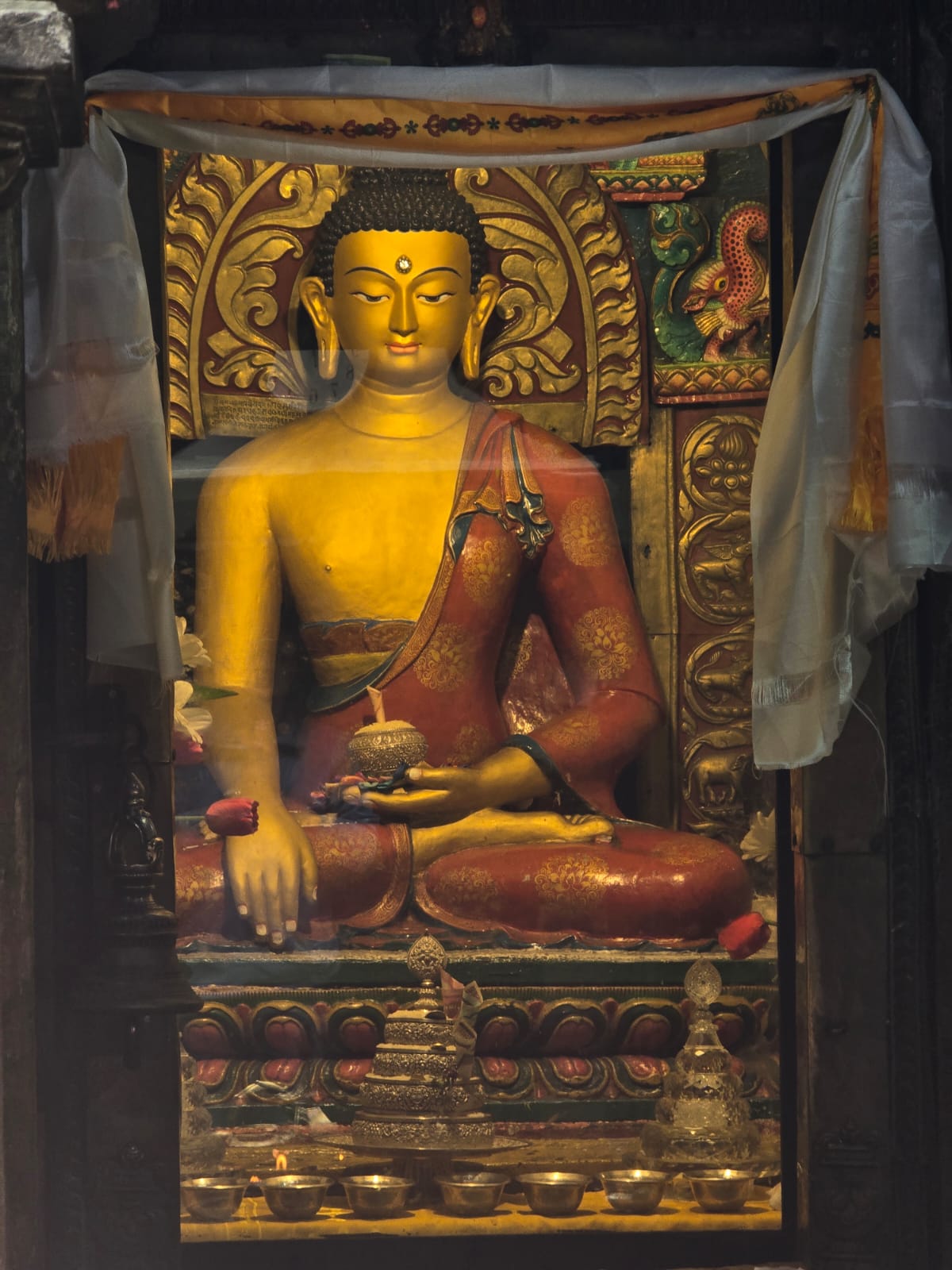
Just off Indrachowk, this pagoda-style temple houses Seto Machindranath (‘White Machindranath’), also called Janabaha Dyo, an aspect of Avalokiteshvara, the Buddhist deity of compassion, and worshipped equally by Hindus as a rain god (There are many form of Machindranath, Seto Machindranath is one of them). The temple is thought to date to around the 10th century. Every spring the deity is placed on a towering chariot and pulled through the streets in the Seto Machindranath Jatra, one of the valley’s great processions, echoing the belief that anyone who visits the temple is blessed with a long life. Shrines and chariot festivals dedicated to Machindranath (in both his ‘red’ and ‘white’ forms, honoured in Patan and Kathmandu respectively) are among the most important annual events for Newar farmers and traders alike.
Stop 9 — Ason Bazar & the Jadibuti Shops (spice market since the Malla era)
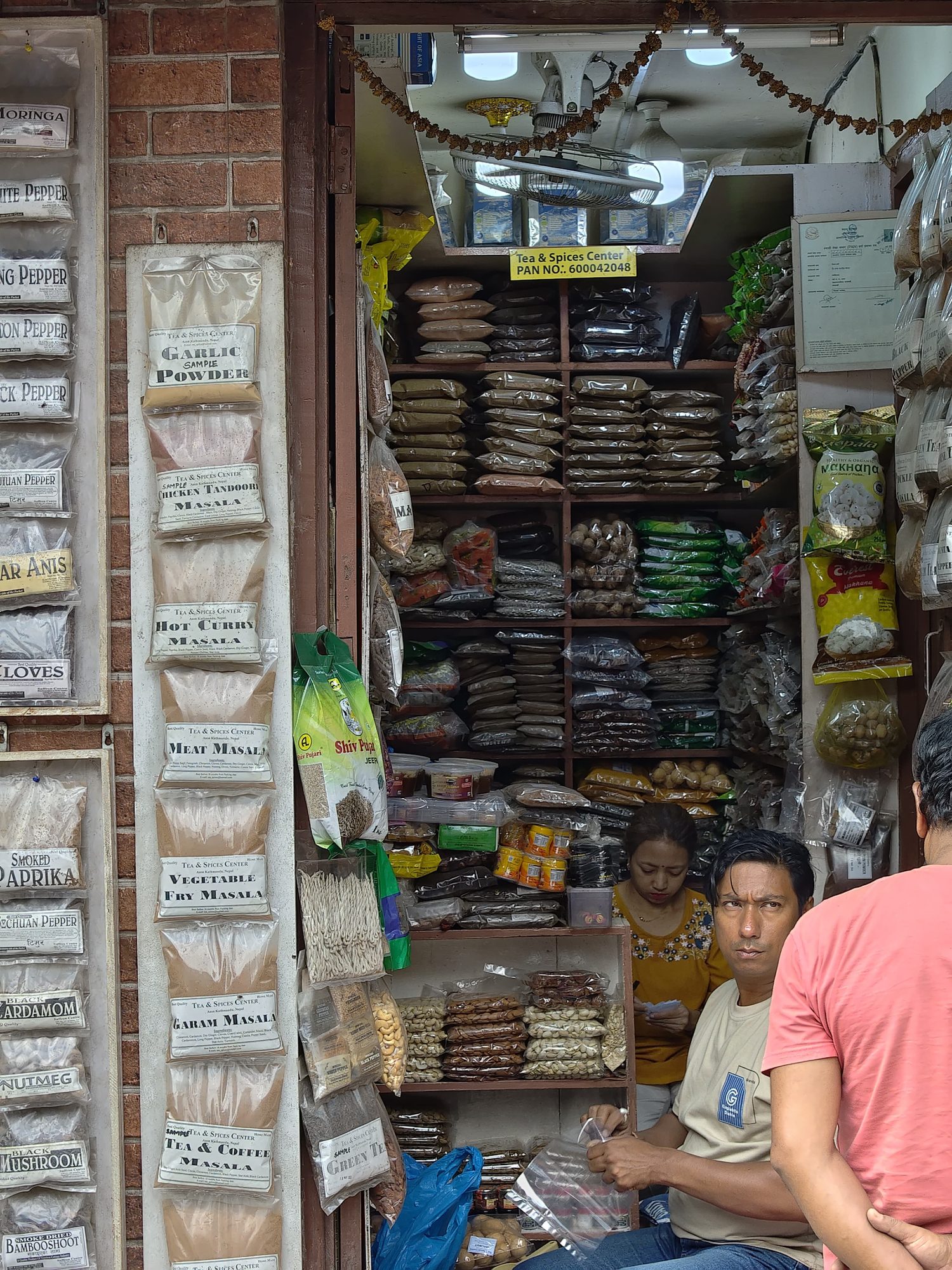
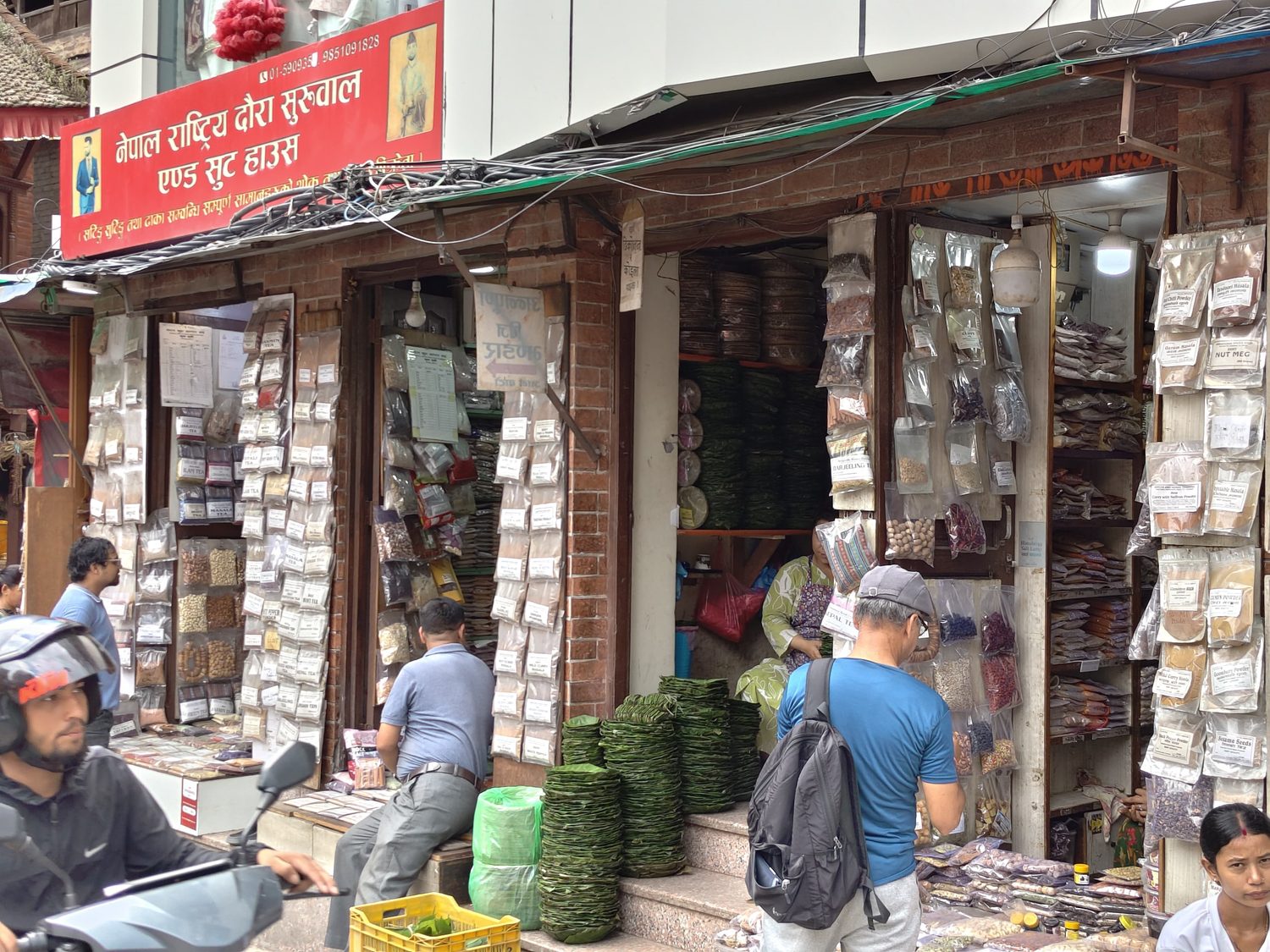
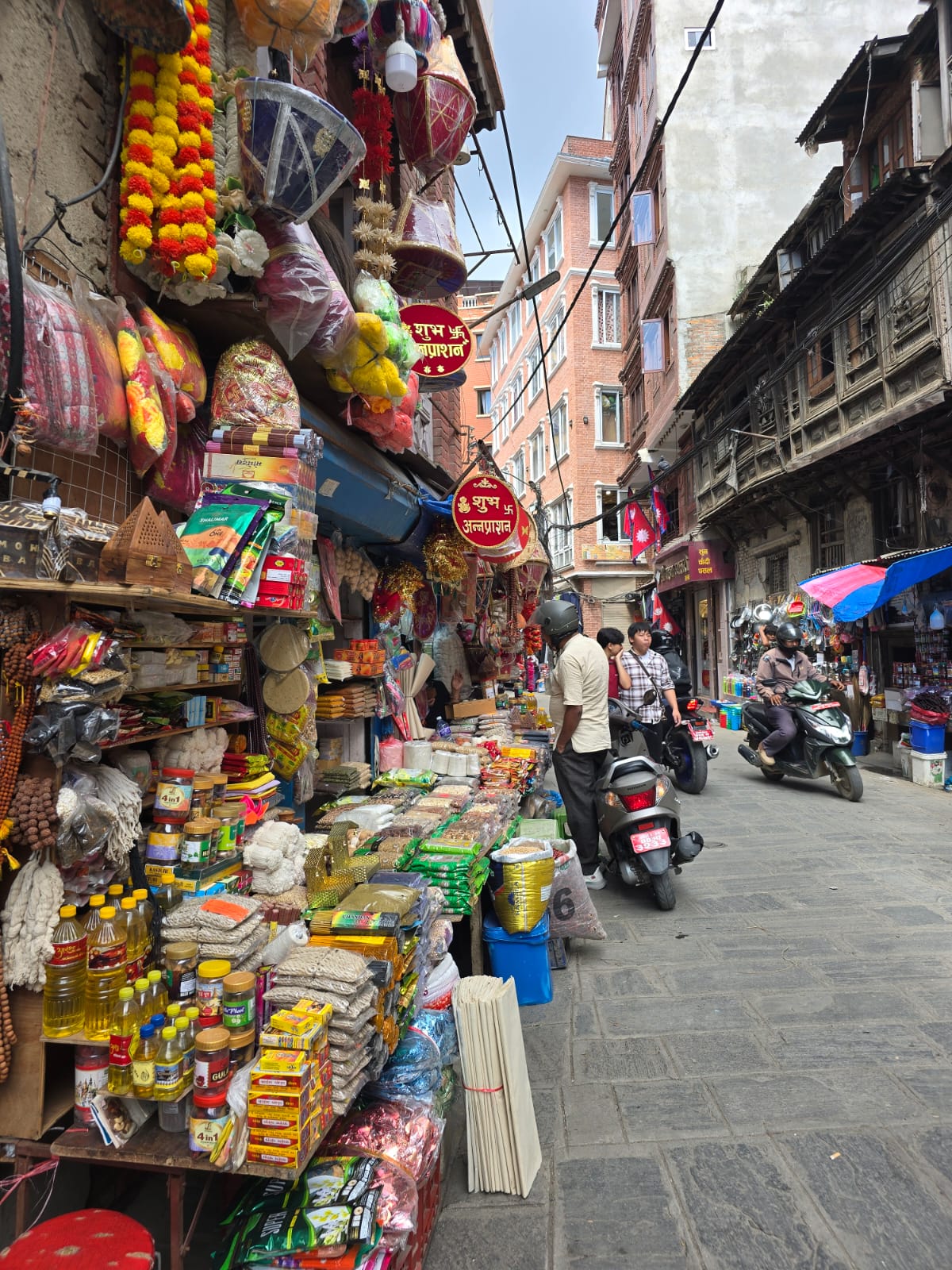
Ason has been a market square for over a thousand years, sitting at the crossing point of six streets and once a key stop on the India–Tibet salt trade route. Traditionally it was Kathmandu’s rice market, watched over by the goddess Annapurna Ajima — the deity of abundant grain — whose three-storey temple still stands at its centre.
Today the surrounding lanes are packed with spice sellers, dried goods, and jadibuti (herbal and medicinal plant) shops, alongside textiles and metalware, making it one of the best places in the city to see everyday Newar commerce still happening exactly as it has for centuries.
Stop 10 — Bangemudha — the Toothache Shrine (Vaisha Dev) (one of Kathmandu’s oldest landmarks)
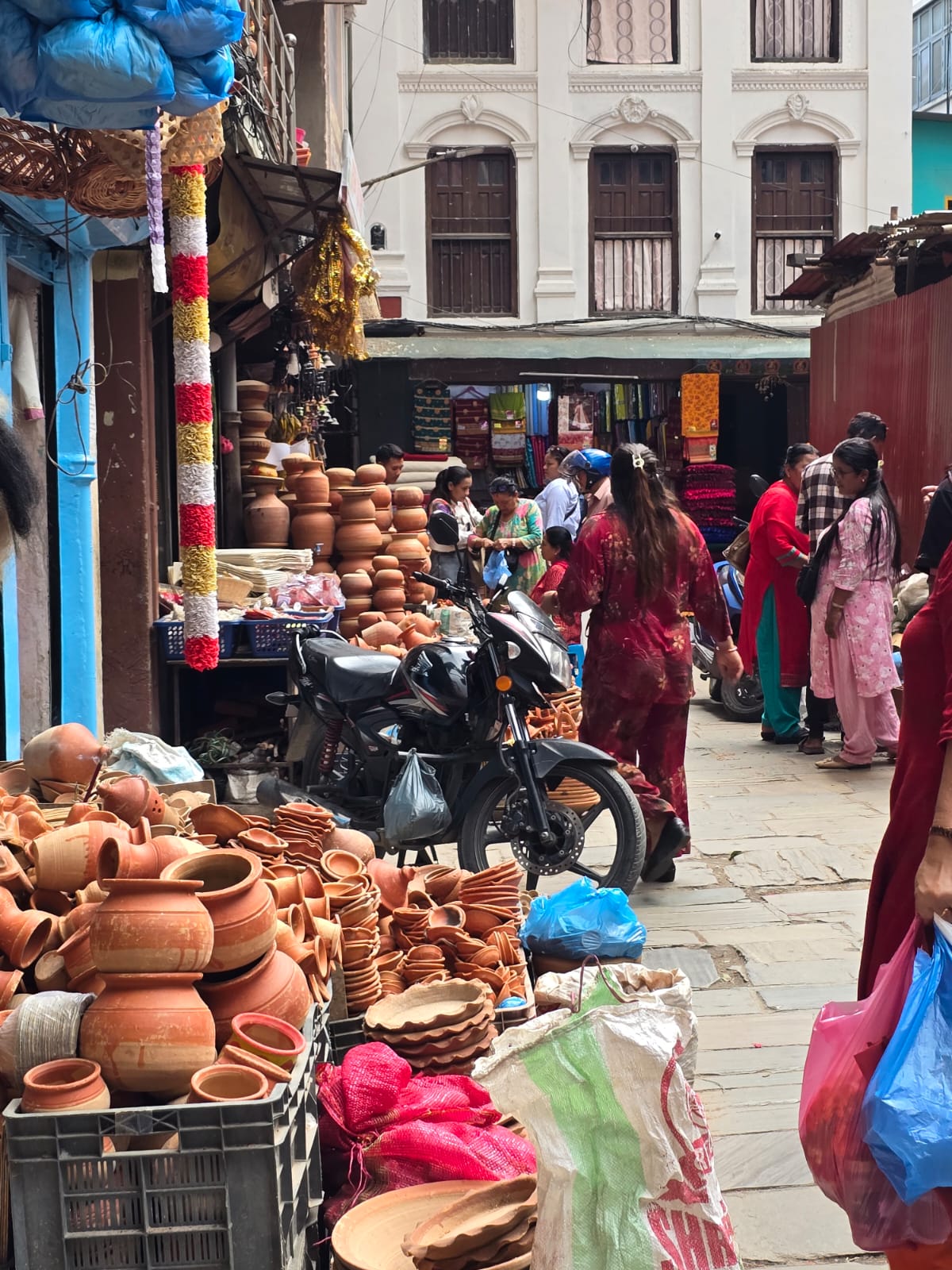
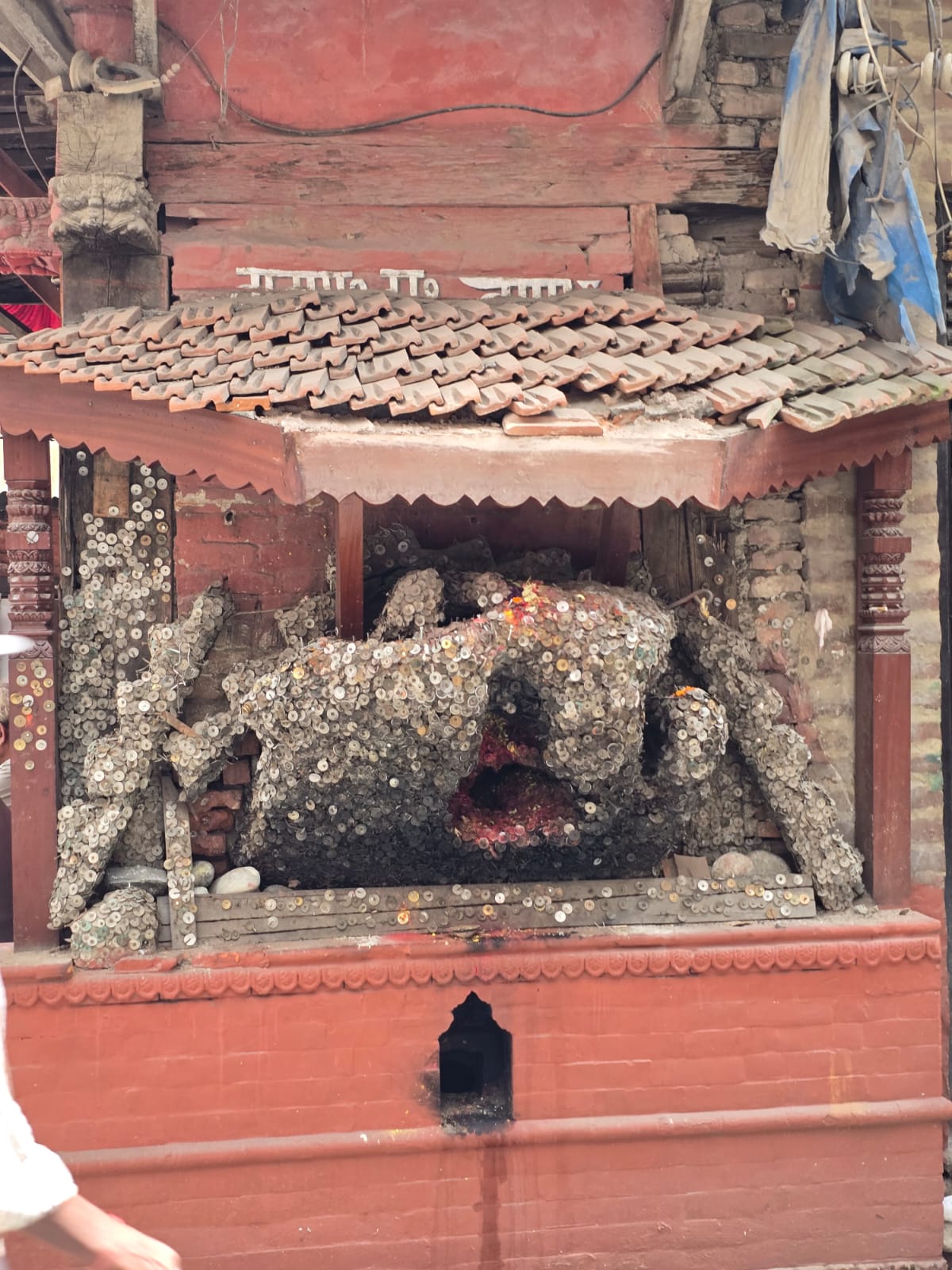
Turning left off Ason towards Thamel, the route passes Bangemudha, home to one of Kathmandu’s most curious sights: a gnarled wooden stump entirely covered in nailed-on coins. It’s a shrine to Vaisha Dev (also called Vaishya Dev or Danteshwori Devi), the Newar goddess of toothache. Local tradition — said to date back to the Lichhavi era — holds that hammering a coin into the wood while asking for relief will cure a toothache. A small gold idol once sat inside the trunk but was stolen years ago; the coins remain. Fittingly, the surrounding neighbourhood has become something of a dental district, with several clinics nearby for anyone the shrine doesn’t quite cure.
Stop 11 — Shee Gha Bihar (quiet Buddhist courtyard before Thamel)
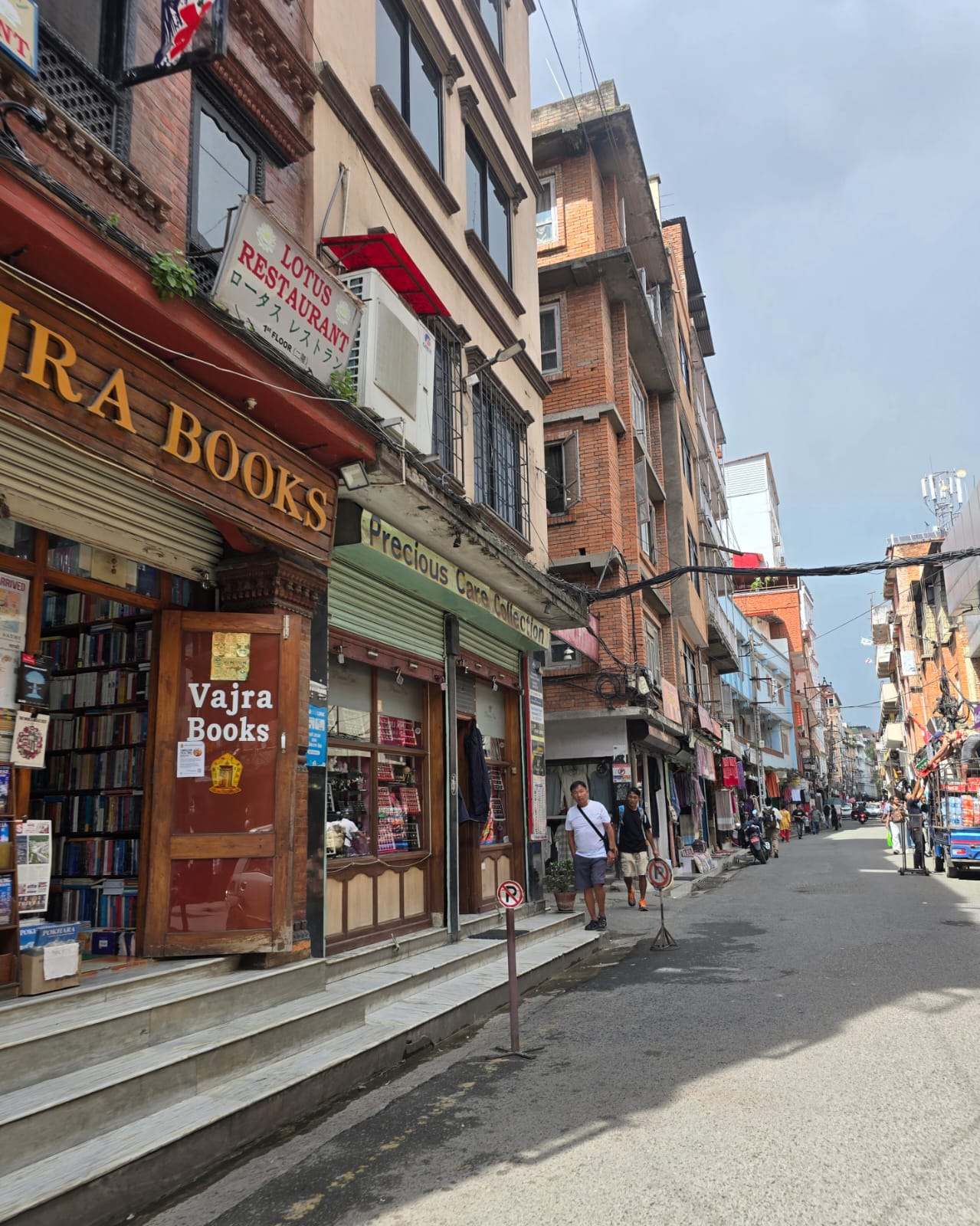
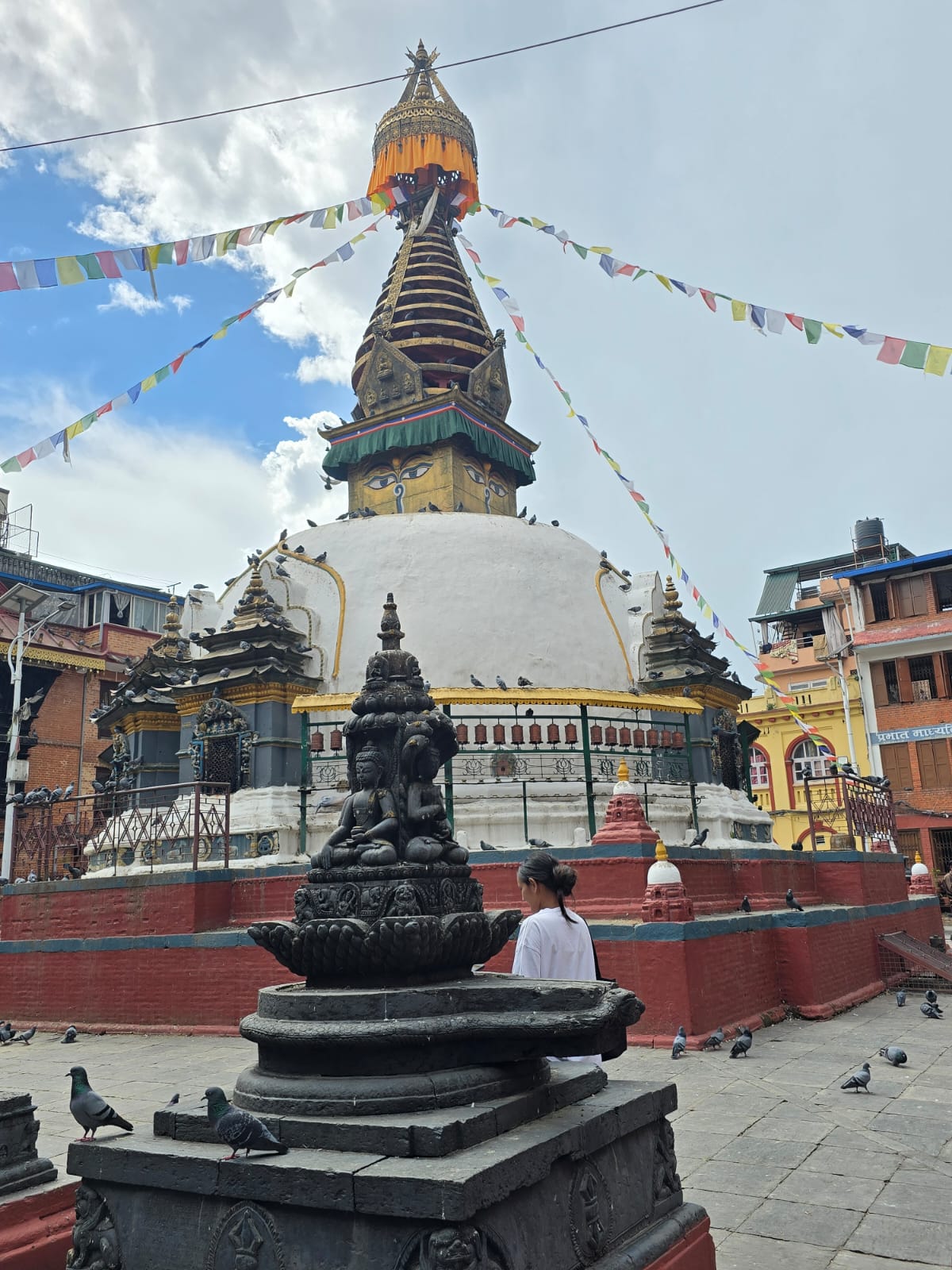
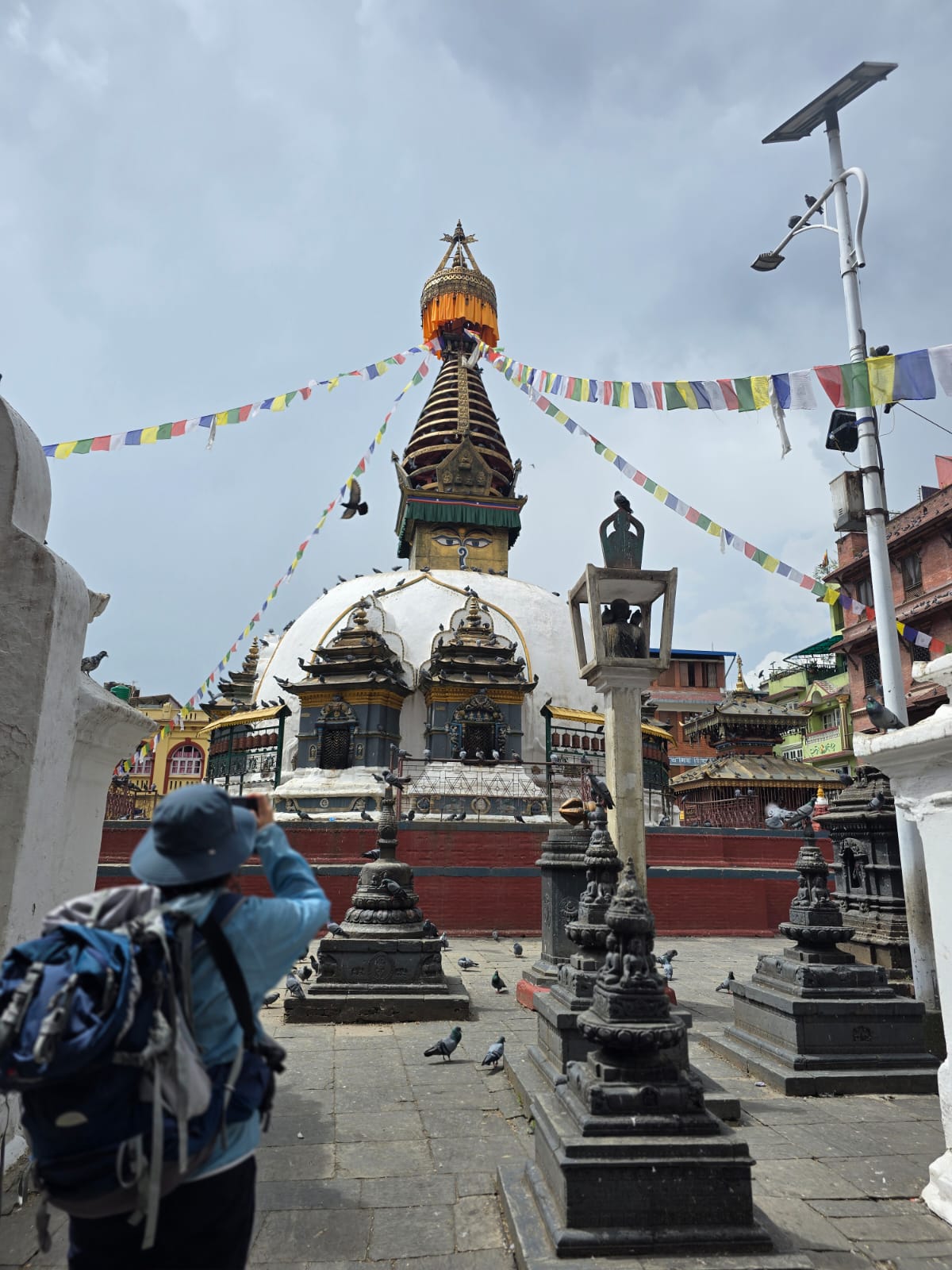
Just before the route opens into Thamel, it passes Shee Gha, one of several centuries-old Buddhist Bahal (monastery courtyards) tucked into this part of the old city, alongside better-known neighbours like Bhagwan Bahal. These small stupa-and-shrine courtyards were founded as centres of Buddhist learning connected to the old trans-Himalayan trade route, and the district around them — Thamel itself — takes its name from this monastic history. They remain quiet, lived-in spaces where locals stop to spin prayer wheels and light butter lamps, a peaceful final note before the walk ends among Thamel’s shops, cafés, and trekking outfitters.
Stop 12 – Thamel
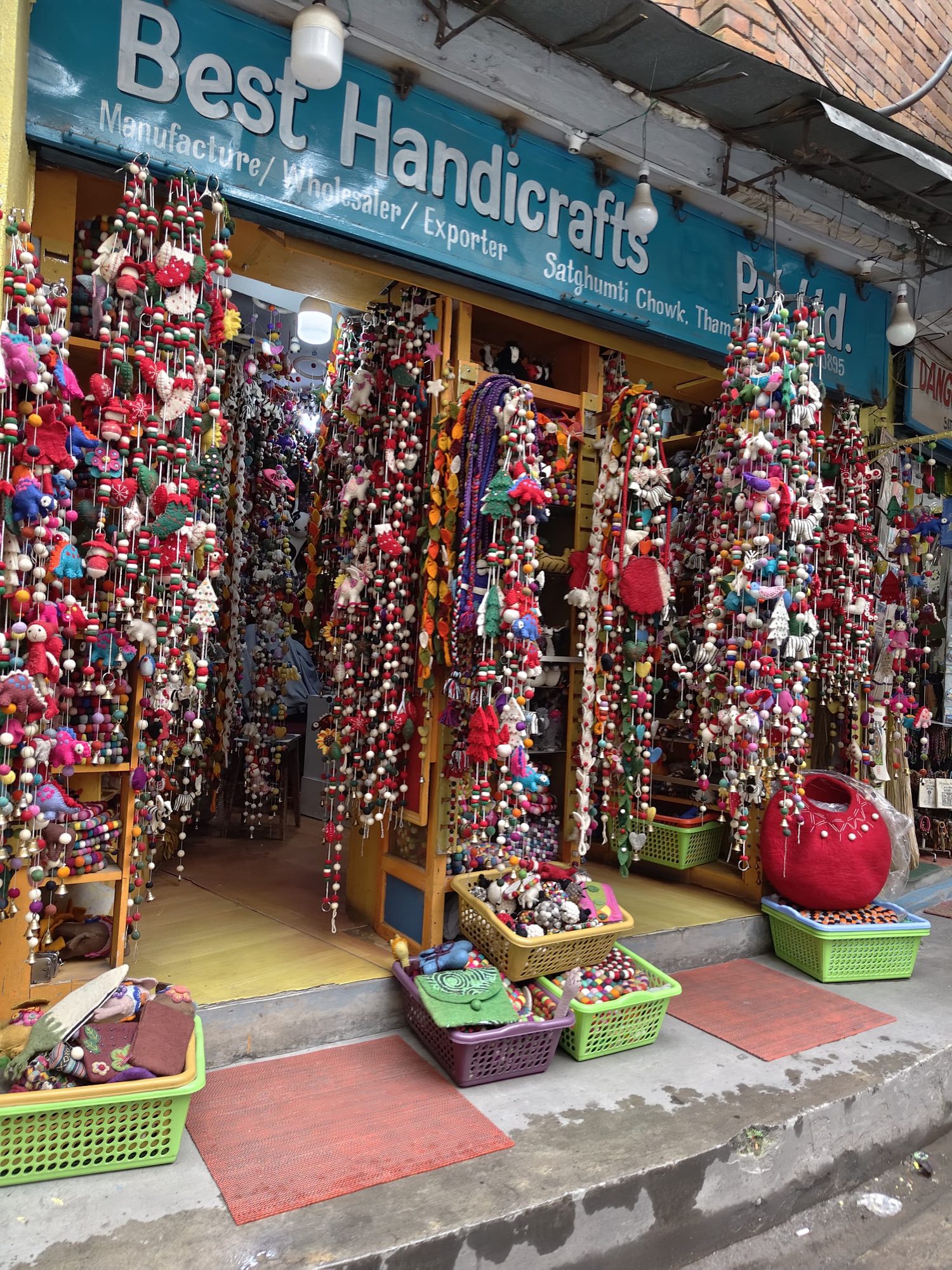
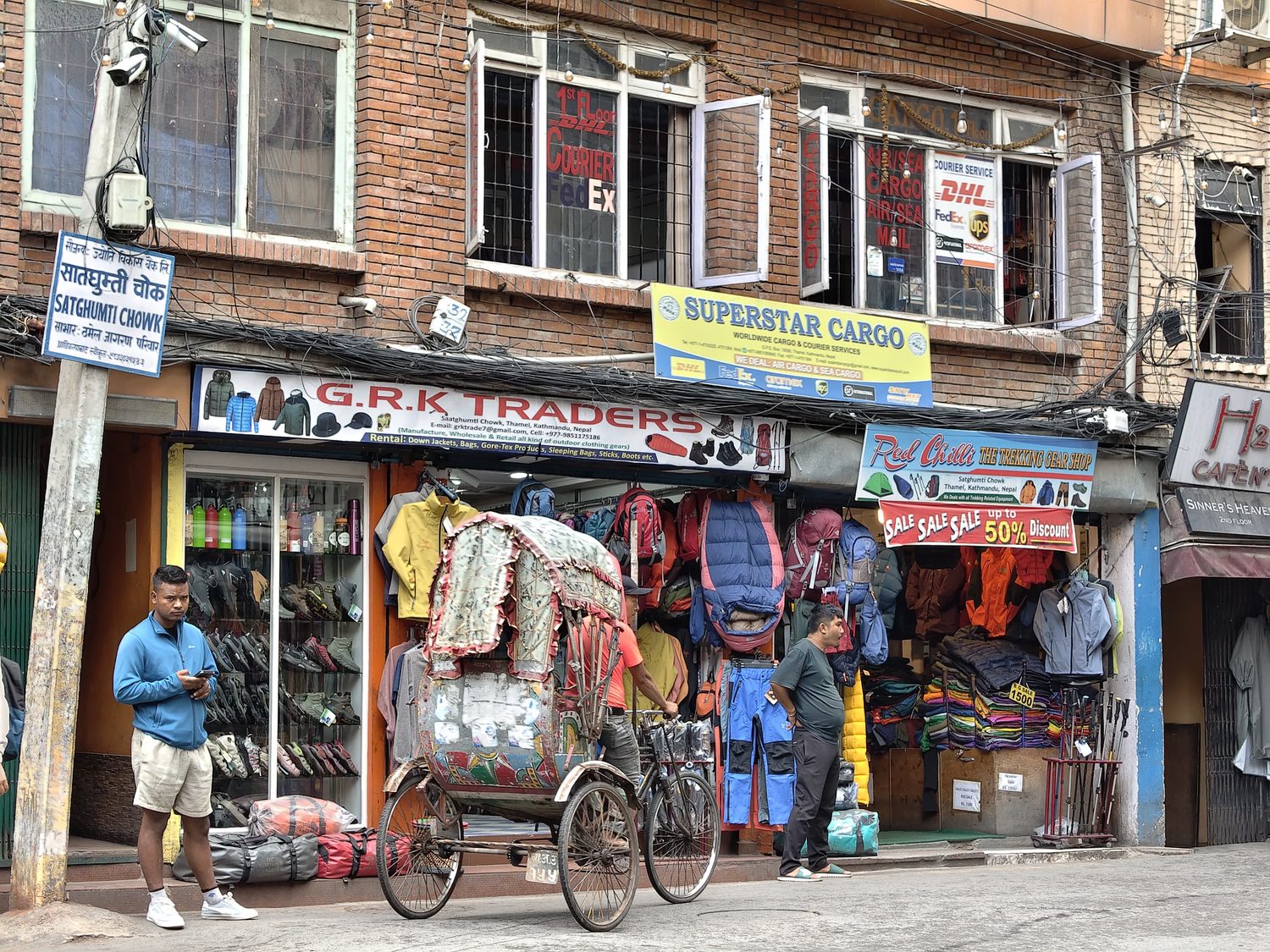
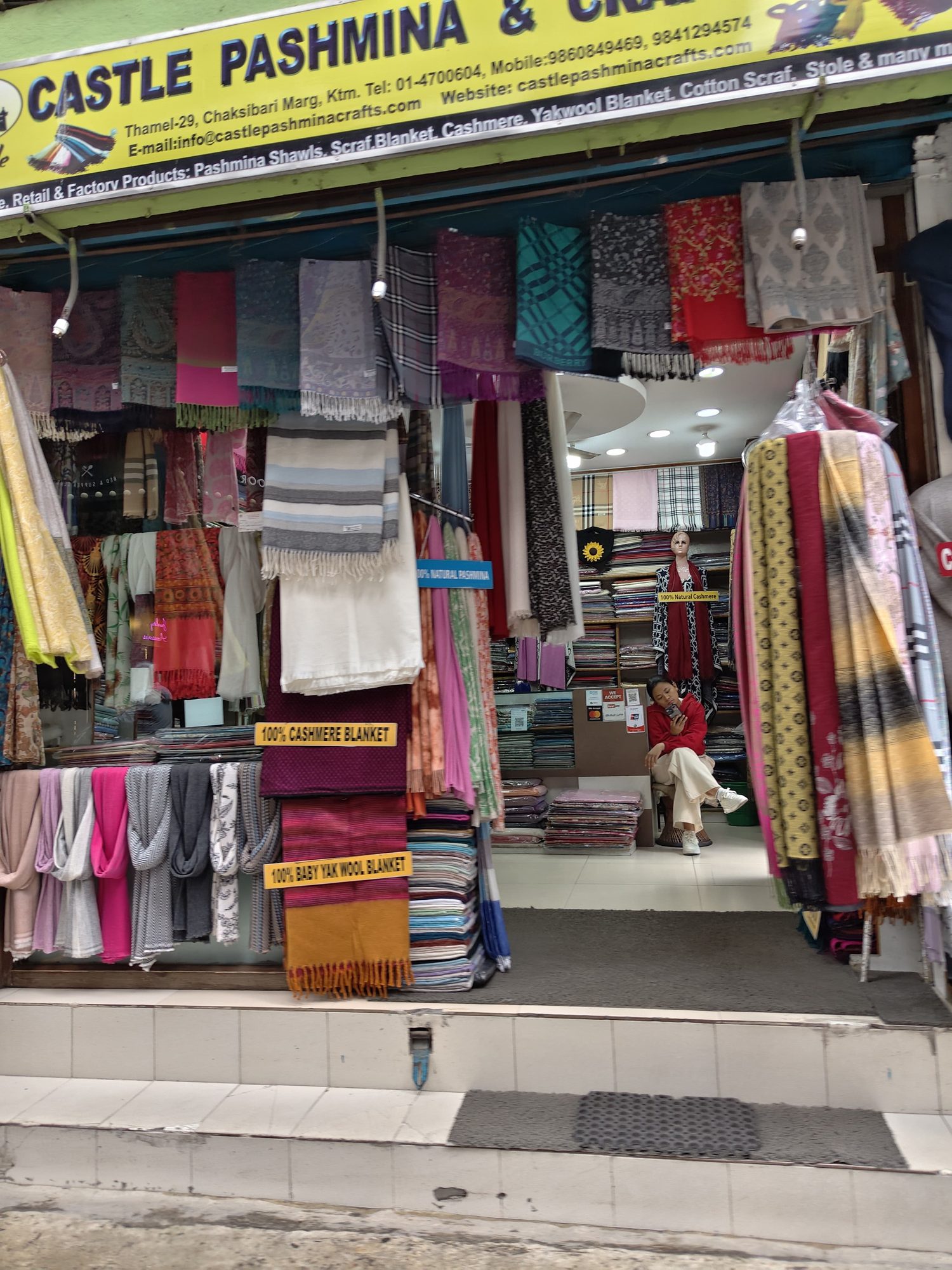
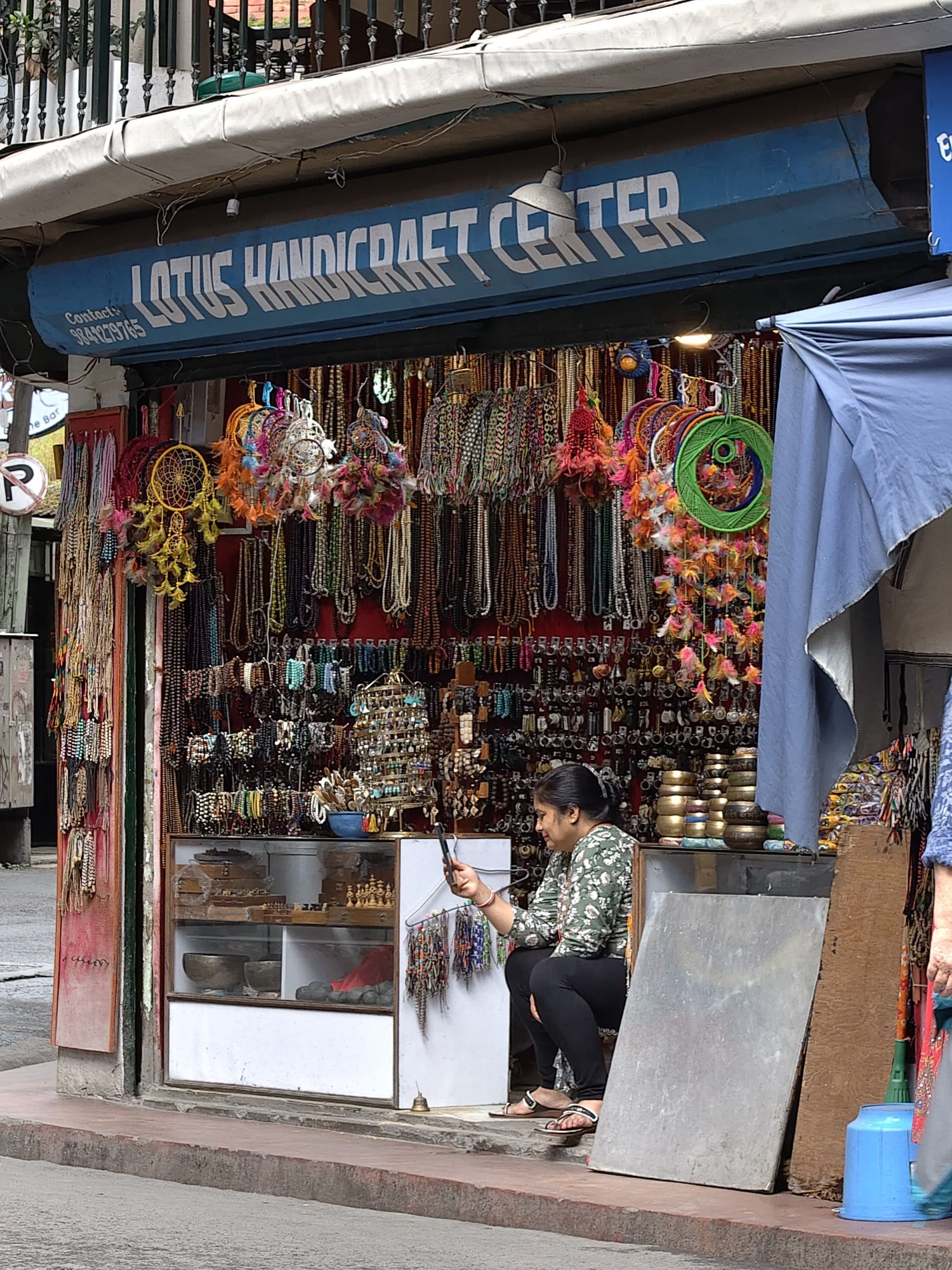
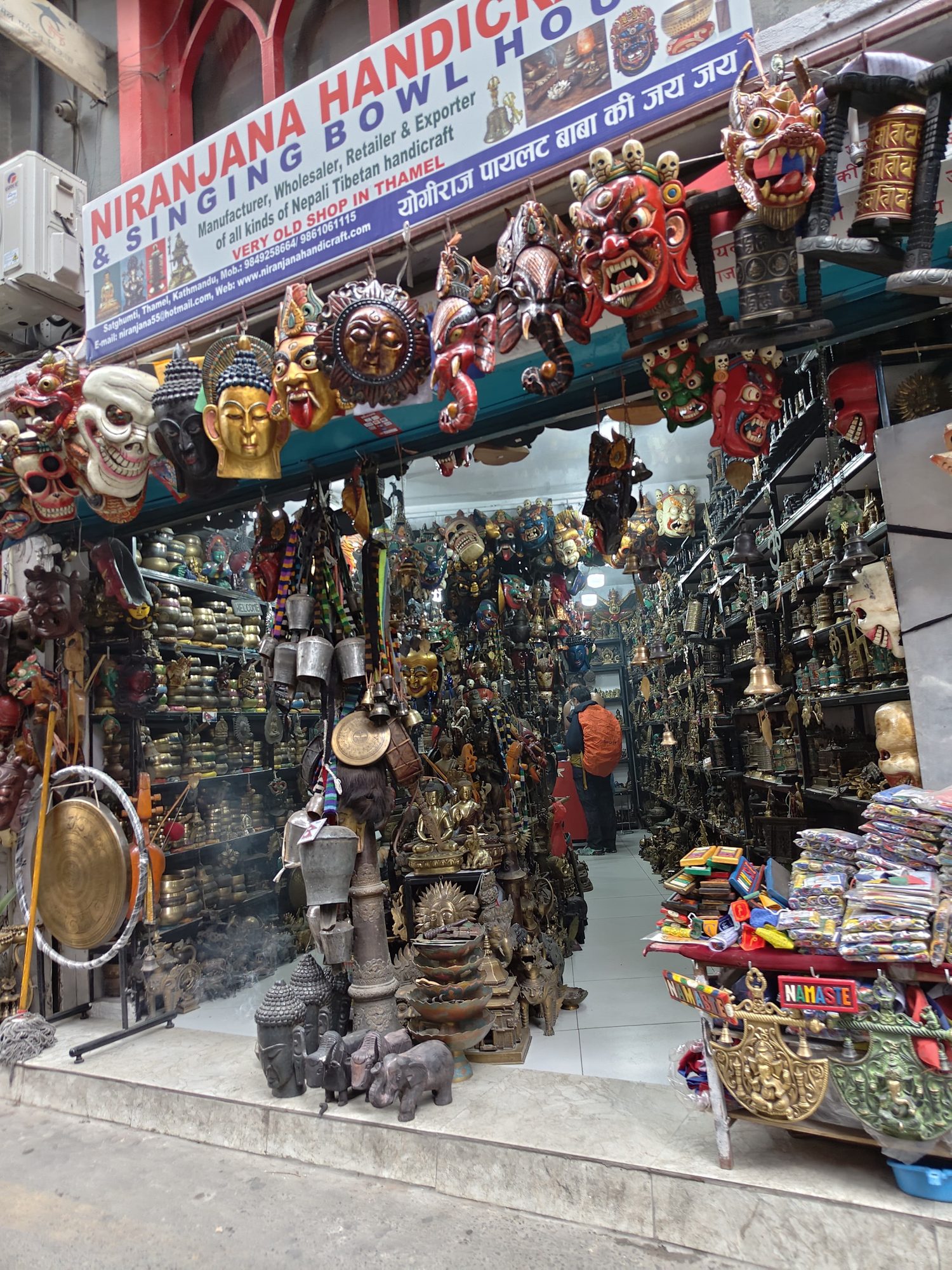
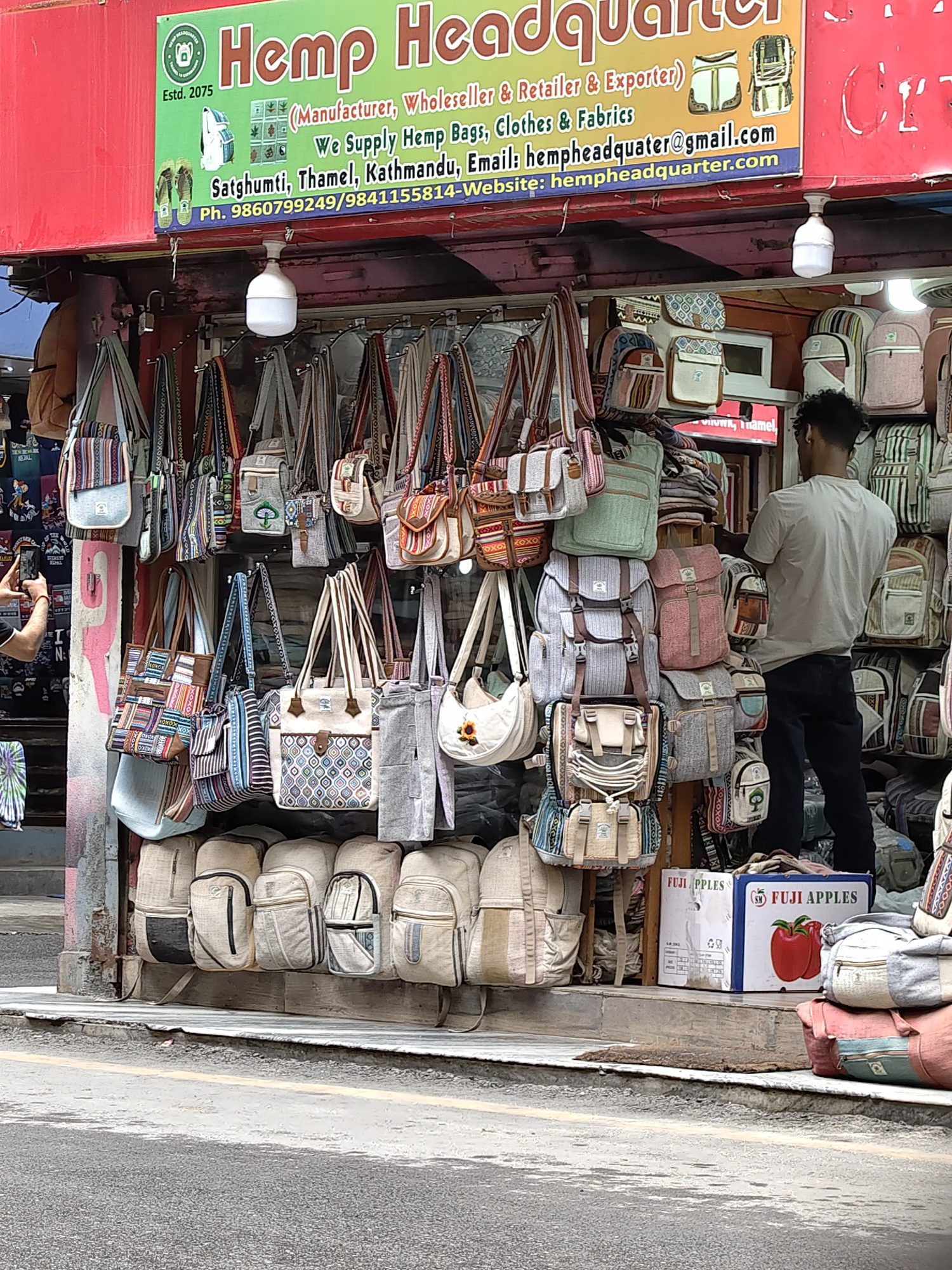
Thamel (derived from the Newari name Tha Bahi) is the commercial and tourism heart of Kathmandu. Famous for its vibrant maze of narrow alleys, colorful shops, and energetic atmosphere, it serves as the primary base for international travelers, trekkers, and mountaineers exploring Nepal. This is the most entertaining place from food, live music, discos to antique shops, handicrafts and unique products of Nepal. This will be the last stop before you redirect to another tour or back to Jungle Mahal.